
What happens if an elephant charges your safari vehicle?
Almost always, nothing. How to tell a mock charge from a real one, what makes elephants nervous, and what to do in the vehicle.

Almost always, nothing. Most elephant charges are bluffs: a big, noisy show that stops well short of the vehicle. The elephant wants you to back off, and a good guide will usually have done exactly that before it ever gets to the charging stage. Serious charges do happen, but they're rare, and guides here spend their whole working lives learning to read elephants so that it doesn't come to that.
It's a question nervous first-timers ask us, usually a little sheepishly, as if it might be a silly one. It isn't. An adult elephant is the biggest animal you'll ever sit next to in an open vehicle, and it's sensible to want to know what happens if it decides it doesn't like you.
- Most charges are mock charges, broken off before the elephant reaches you.
- The warning signs come early, and your guide is watching for them long before you notice.
- Herds with small calves and bulls in musth need the most room.
- In the vehicle, stay seated and quiet, and follow your guide.
What does a mock charge look like?
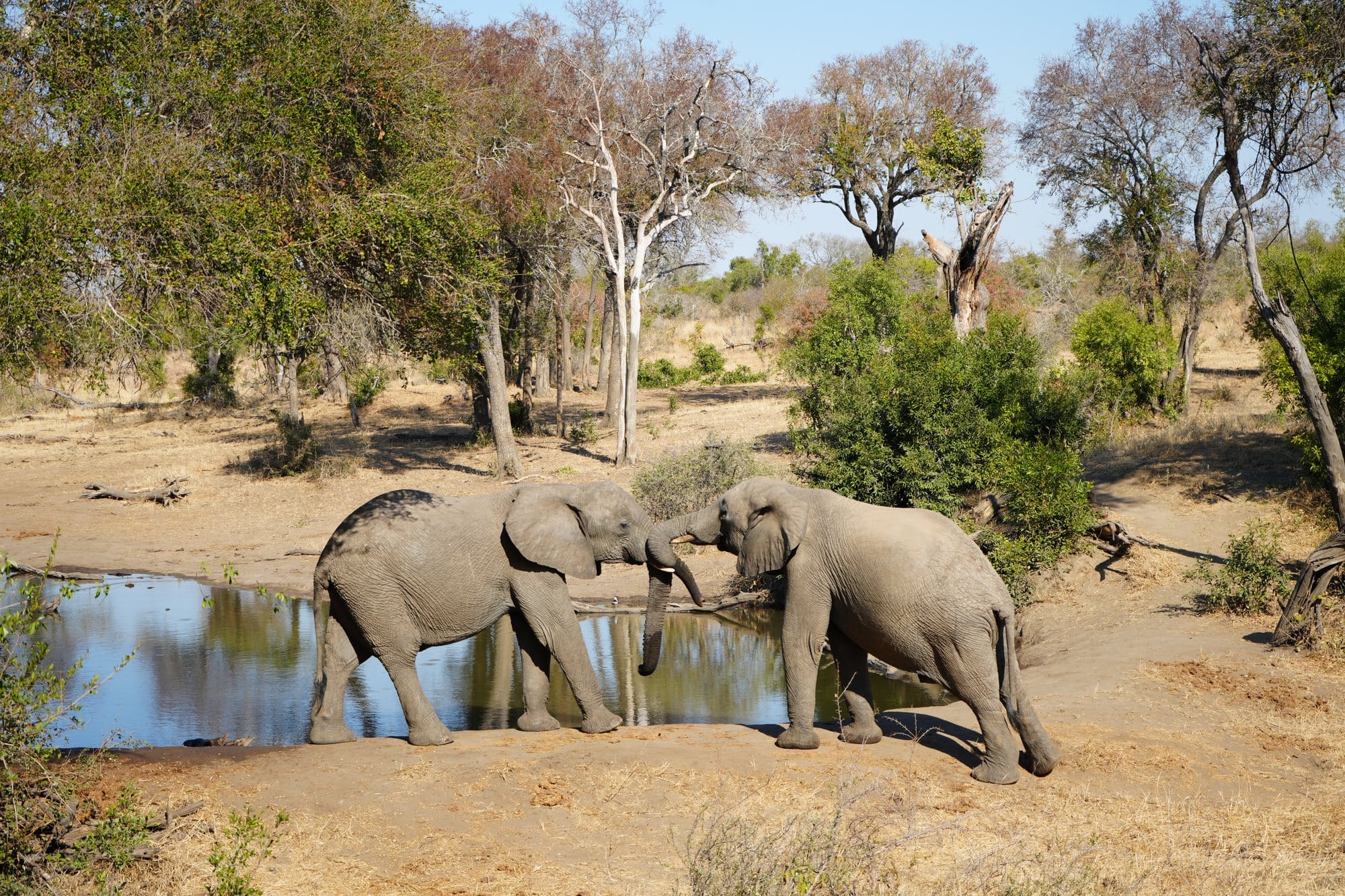
Alarming, which is the whole point. The elephant turns square on to you, head held high and ears spread wide. There may be a shake of the head, a swing of the trunk, a kick of dust and a trumpet loud enough to feel in your ribs. Then it runs at you for a few strides and pulls up short.
SANParks puts it plainly in its notes on elephant behaviour: most charges are mock charges, broken off before the target is reached. Think of it as a very large, very clear message that you're closer than the elephant would like.
What usually follows is a stand-off. The elephant holds its ground, ears still out, and stares. Then, often quite suddenly, it loses interest and wanders off, sometimes stopping to pull up a bush on the way as if to make a point. Everyone in the vehicle breathes out, and there's usually one laugh that comes out a bit too loud.
How is a real charge different?
A real charge is rarer, and it tends to be quieter. The noise and the theatre drop away. Guides look for an elephant that goes silent, with its ears pulled back, its trunk curled up and out of the way, and that keeps coming instead of slowing down.
The honest bit is that these signs aren't a neat checklist. Body language varies between elephants and between situations, and a mock charge can turn into something more serious if the elephant still feels hemmed in. That's why the reading is best left to your guide, who will have given the elephant more space long before this point.
What makes an elephant nervous?
Mostly the things that would make any of us nervous: feeling crowded and having nowhere to go.
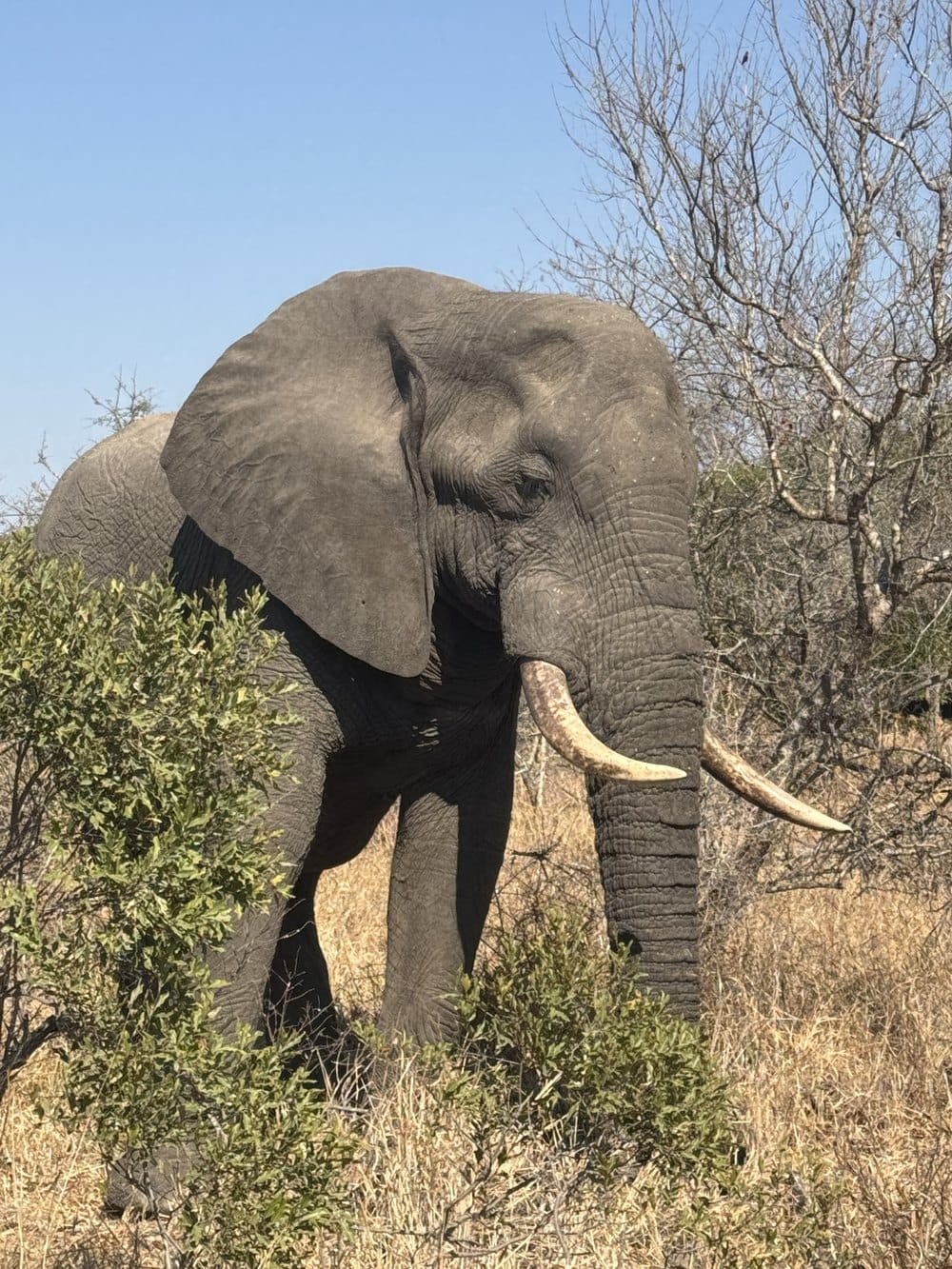
Breeding herds are the ones to watch. These are family groups of females and young, led by an older female, and when there are small calves in the group everyone is more protective. Getting between a mother and her calf, or between a herd and the water it's walking towards, is the classic way to annoy one.
Bulls in musth are the other. Musth is a period when an adult bull's testosterone runs high, and you can often spot it. Look for a dark, wet stain running down the side of the face from the gland between the eye and the ear, a steady dribble of urine down the back legs, a greenish tinge to the sheath and a strong smell. A bull in musth is more aggressive and harder to predict, mostly towards other bulls, and guides give him plenty of room.
History matters too. Elephants that have learned to be wary of people, through poaching or run-ins at the edge of farmland, can be jumpier around vehicles than elephants that have only ever met quiet game drives.
What does a good guide do?
Reads the elephants early. A good guide is watching the ears, the tail, the head, the way the herd is moving and whether there are tiny calves tucked in among the legs, well before anyone else in the vehicle has picked up a camera.
Then it's about positioning. The vehicle sits where the elephant has a clear way past and the guide has a clear way out. Guides don't drive through the middle of a herd or box an animal in against thick bush or another vehicle. If an elephant starts to object, the usual answer is to give ground: move off slowly, without revving or rushing.
Some experienced guides will sit quietly through a mock charge when they know the elephant and have room behind them. That's a judgement call built on years of watching, and it's not the moment for a second opinion from the back row.
What should you do in the vehicle?
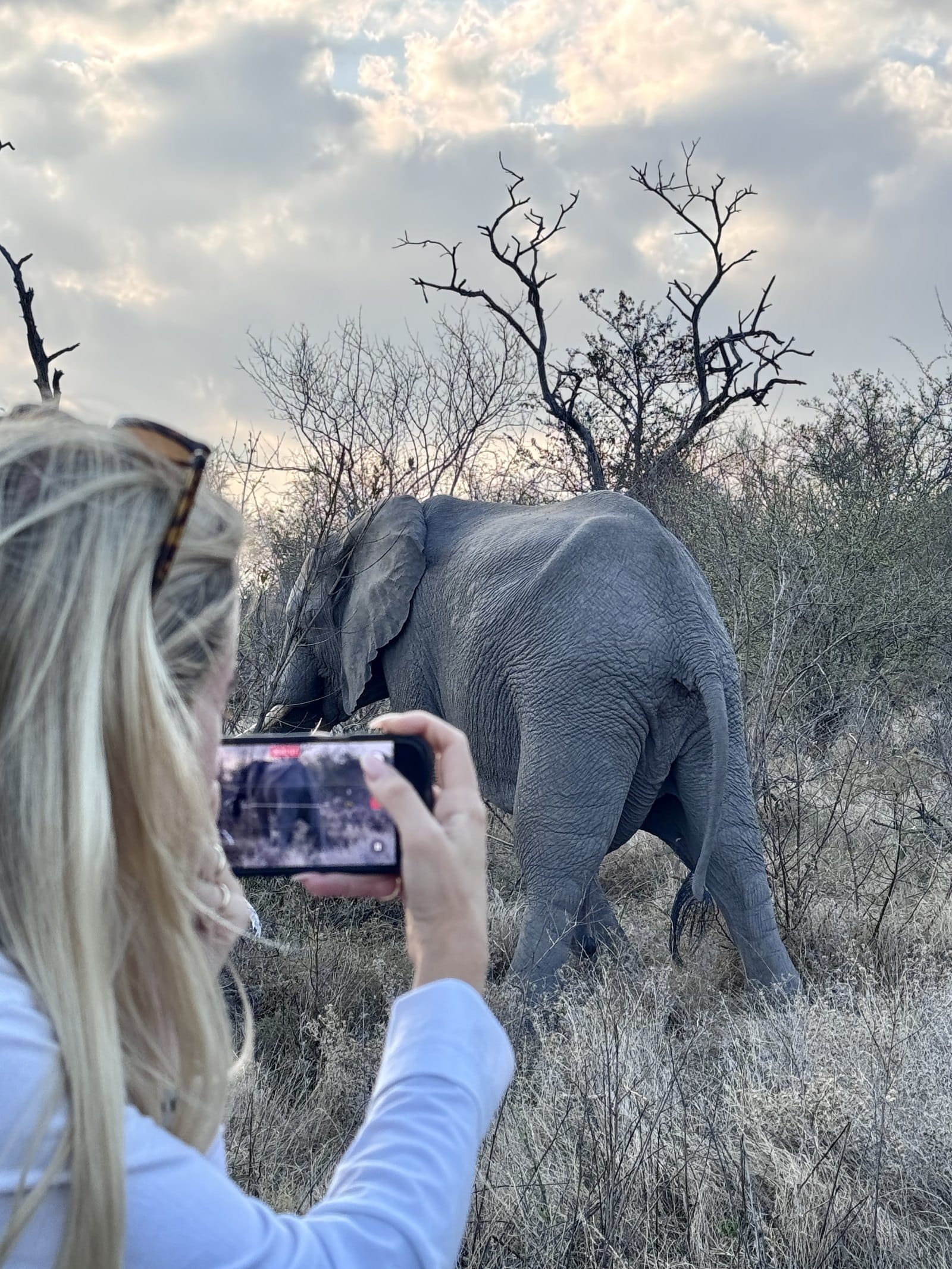
Stay sitting down. Guides will tell you that elephants tend to treat an open vehicle full of seated people as one large, uninteresting shape, and that someone standing up for a better photo breaks that outline. Keep your voice low and your arms and lenses inside the vehicle. Avoid sudden movements, and never bang on the side to get an elephant's attention.
If your guide says something, do it straight away, even if it's only a whisper to keep still. With children, it helps to talk this through before the first drive so the rules feel like part of the fun rather than a telling-off. Our guide to safari activities that work for children has more on what suits different ages.
All of this is about game drives. On foot, the rules are different and stricter, and we cover them in our piece on what a walking safari is really like.
Is it any different in a private reserve?
The elephants are the same. The setting is a little different. Private reserves in the Greater Kruger usually limit how many vehicles can sit at one sighting, which means less crowding, and guides there often get to know individual herds and bulls over the years. Both help.
In the national park, most visitors are in closed cars on public roads, and the park's rules are clear: stay inside your vehicle and keep every part of you inside it. If an elephant is on the road, give it space and wait. Never try to squeeze past. If you're weighing up the two, our comparison of the Sabi Sand and the Kruger sets out how game drives differ.
How we'd plan it if you're nervous
Tell us. It's one of the easiest things to sort out in advance. We'll let the lodge know before you arrive, so your guide can talk you through elephant behaviour on the first drive and choose sightings with plenty of space. Sitting quietly beside a relaxed herd, close enough to hear them pulling up grass, is one of the best hours you can have on safari. A guide who knows you're nervous will make sure that's the version you get.
Questions we are asked
Do elephants attack safari vehicles?
Very rarely. Most charges are mock charges that stop short of the vehicle, and good guides give elephants room long before it gets that far. Serious incidents do happen, which is why guides take every warning sign seriously.
How can you tell if an elephant is about to charge?
Watch for a raised head, ears spread wide, head shaking, trunk swinging and dust being kicked up. These are warnings that you're too close. The signs vary between elephants, so leave the judgement to your guide.
What is musth?
A period when an adult bull elephant's testosterone runs high. Signs include a dark stain down the side of the face, dribbling urine, a greenish tinge to the sheath and a strong smell. Bulls in musth are more aggressive and less predictable, so guides keep their distance.
Is it safe to take children near elephants on safari?
Yes, with a good guide and children who understand the rules. Many lodges set a minimum age for game drives, and some offer private vehicles for families. Talk to your children before the first drive about sitting still and keeping quiet.
What should I do if an elephant blocks the road on a self-drive?
Stay in your car and give it space. Don't try to drive past or around it. Wait for it to move on, and if it comes towards you, reverse slowly to give it more room.
Vikki Jackson is co-founder of Marula Hill Travel. We plan boutique safaris across South Africa, Botswana, Zambia, Zimbabwe, Kenya, Tanzania, Rwanda, Uganda, Namibia, and Mozambique. We have stayed in most of the lodges we recommend, and we tell you when we have not.
If this resonated
The bush has been expecting you
Start with a conversation. We will ask what makes you want to wake up at four-thirty, and build from there.
Begin a conversation
When does the woodland kingfisher arrive in the Greater Kruger?
Usually around mid-November, after the first rains. Our favourite summer bird, how to recognise its call, and the other migrants that arrive with it.

What do animals do when Kruger hits 41°C?
Mostly, they do less. How the animals of the Greater Kruger handle a heatwave, and what it means for your game drives.

Can you keep halal on safari in South Africa?
Yes, with planning. How halal works at South African safari lodges, from certified meat to prayer times on game drives.

Madikwe or Kruger? Emery Hassall explains
Madikwe isn't a smaller Kruger. Emery Hassall of Madikwe Safari Lodge explains why it works best alongside one.

Amarula fudge: a taste of the Lowveld to make at home
Four ingredients, one heavy pot and a bit of patience. Here's the fudge, and the tree behind it.

Serondella Safari Lodge: our review
Four suites beside a Thornybush waterhole that rarely sits still. We have stayed twice, and it keeps earning its place on our shortlist.

Christmas on safari in South Africa: is it too late to book?
Christmas in the bush is hot and green, with baby animals everywhere. Here is what the festive season is really like, and how to find space at this stage.

Michelin Keys on safari: what they tell you, and what they don't
A Michelin Key tells you a lodge is a remarkable place to stay. It can't tell you how good the safari will be. Here is how to use one.

BA's new Tanzania flights: how to build a safari and Zanzibar trip that flows
Fly into the safari, fly home from the beach. How to use BA's new Tanzania route without spending half your holiday in transit.

How to read a safari quote: what all-inclusive really covers
Two quotes for the same week can sit a long way apart and both be honest. Here is what each line covers, what all-inclusive really means, and where the differences hide.

Safari specialist or big operator: who should plan your safari?
A fair look at when a large safari operator is the better call, when a small specialist is, when to book direct, and what to ask any of them before you pay.

Kruger park fees are going up: what it means for your safari quote
New Kruger fees start on 1 November. Here is who actually pays them, and why most Greater Kruger guests pay a reserve levy instead.

Greater Kruger in summer: is a hot, dry season still worth it?
A hotter, drier summer is on the cards. Here is what that means for your days in the bush, from people who live here.

Gay travel in South Africa: an honest safari and city guide
Cape Town, Johannesburg and the bush: an honest guide for gay and lesbian couples planning South Africa.

Where the herds are: the Great Migration month by month
The migration moves all year. Here is where the herds tend to be in each season, and how we plan a trip around them.

Walking safari: why you see Africa differently on foot
You cover less ground on foot, and somehow you see much more.

Planning your first safari? Start with the people who can hear the hyenas
What we would tell you about your first safari if you sat down at our kitchen table. There is usually gin.

What we would tell a young woman starting out in safari travel
Both of us came out of corporate, one of us with travel experience already. This is the advice we give when a young woman writes and asks how to build a career in luxury safari travel.

Is a safari safe for gay and lesbian couples?
An honest, country-by-country answer for same-sex couples planning a safari.

Botswana has water again. Here is what that means for your safari.
Botswana is having a stronger water year. Here is what that changes, and why the right lodge and the right week still matter more than a brochure month.

18 On The Hill: our stay at a tented lodge in the Greater Kruger
We stayed at 18 On The Hill, a luxury tented lodge in the Greater Kruger. The food, the suites, a kosher kitchen and drives that never felt the same twice.

Royal Malewane reopens: what we remember, and what the fact sheet confirms
The original Royal Portfolio property is back after months behind scaffolding. We haven't seen it yet. Here is what we know anyway.

We run on solar and we have not printed since 2019
Vikki and Sian on solar power, paper, and what a small safari company can honestly claim.

Sandringham Private Game Reserve: should you go early, or wait?
Greater Kruger's newest reserve opens in August 2026. Our honest take on who should book Sandringham early, and who should give it a few seasons.

How do you want to feel when you get home?
Why we plan safaris around how you want to feel when you get home, not around a pin on the map.
