
Where the herds are: the Great Migration month by month
The migration moves all year. Here is where the herds tend to be in each season, and how we plan a trip around them.

Vast herds of wildebeest, with zebra and gazelle travelling alongside them, spend the year walking a slow, loose clockwise loop through Tanzania's Serengeti and into Kenya's Maasai Mara, then back again. They are following the rain, and the fresh grass that comes after it.
The river crossings get the headlines. They are one chapter in a story that runs all year, and knowing roughly where the herds are each month is the most useful thing you can bring to planning a migration safari. It decides where you should sleep.
Where is the Great Migration each month?
Here is the short version. The detail, and what each season is like to travel in, follows below.
- December to March: the southern Serengeti and Ndutu. Calving peaks in late January and February.
- April and May: the long rains. The herds drift north and west through the central Serengeti, and the rut begins.
- June and July: the western corridor, with the first river crossings at the Grumeti.
- Late July to October: the northern Serengeti and the Maasai Mara, crossing the Mara River in both directions.
- October and November: the short rains pull the herds back south through the eastern Serengeti.
Why do the wildebeest keep moving?
Grass and water, mostly. The southern plains grow on old volcanic soil, and after the short rains they produce short, mineral-rich grass that suits mothers with young. That is why the calves are born there. As those plains dry out, the herds head for the permanent water and longer grass of the north and west. When the rain comes back to the south, so do they.
It also explains why nobody can promise you a date. The route barely changes from year to year, but the timing shifts with the rain. A late wet season can hold the herds in the south for weeks longer than the calendar suggests, and an early one can send them north ahead of schedule. Every month-by-month guide, this one included, describes the usual pattern. The wildebeest have not read any of them.
When is calving season in the Serengeti?
This is the season a lot of our guests fall hardest for. The herds spread across the open short-grass plains of the southern Serengeti and the Ndutu area, which sits just over the boundary in the Ngorongoro Conservation Area. Most of the year's calves arrive within a few weeks, usually peaking in late January and February. A newborn wildebeest is on its feet within minutes and running with its mother soon after. It has to be.
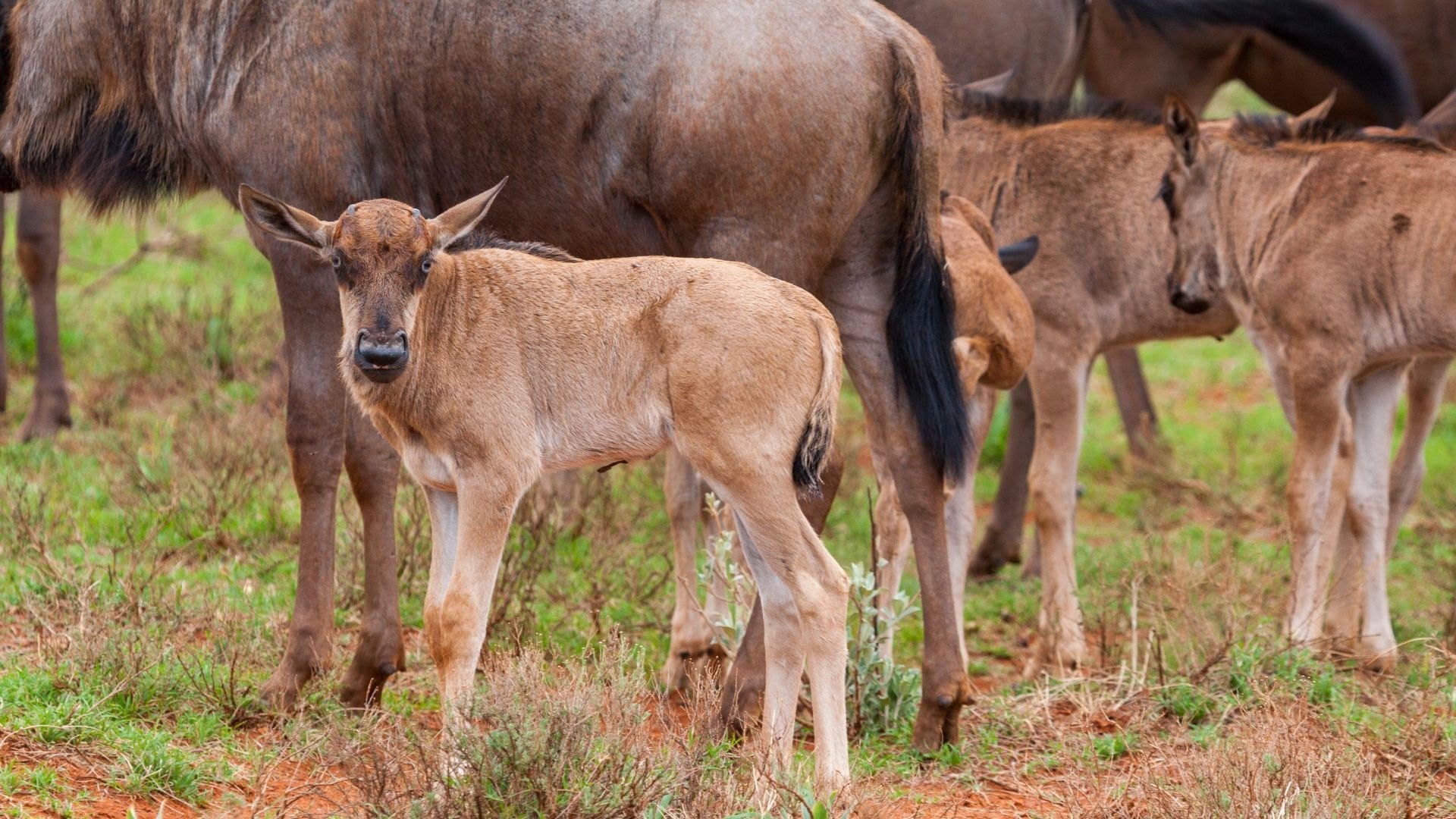
Where there are young animals, predators follow. Lions, cheetahs, hyenas and jackals work these plains in numbers that are hard to match anywhere, and because the country is so open you can often watch a hunt from start to finish. The plains are green after the rains, and there are usually fewer vehicles than you will find in the north during the crossings. If you want the migration at its most alive rather than its most famous, this is where we would start the conversation.
What is the migration like in April and May?
By April the long rains have usually set in properly. The herds leave the southern plains and move north and west through the central Serengeti, often in long columns that stretch to the horizon.
This is also when the rut gets going. Through May and into June, the bulls stake out small territories, gather females and fight over them, and their grunting carries a long way across the plains. It is one of the least talked-about chapters of the migration and one of the noisiest.
Afternoon storms can make the roads heavy going, and some lodges close for part of this period. In return you get the Serengeti at its greenest, with far fewer people in it. The herds are spread out and on the move, so this window suits travellers who are relaxed about exactly what they will see. By late May, the leading columns are usually heading for the western corridor.
When are the Grumeti River crossings?
Around June and July, depending on the rain, a large part of the migration passes through the Serengeti's western corridor and crosses the Grumeti River. This is the first river crossing of the year. The Grumeti is smaller than the Mara and its crossings are harder to predict, but the crocodiles are waiting, and there are usually fewer vehicles.
The western corridor is a good choice if you want the drama of a crossing without the busiest part of the season. It also fits neatly into a longer Tanzania trip that takes in the central Serengeti and the Ngorongoro Crater.
When are the Mara River crossings?
This is the scene most people picture. From late July to October, the herds move between the northern Serengeti and Kenya's Maasai Mara. The wildebeest bunch on the riverbank, sometimes for hours, until one finally jumps and the rest pour into the water after it. August and September tend to be the busiest months.
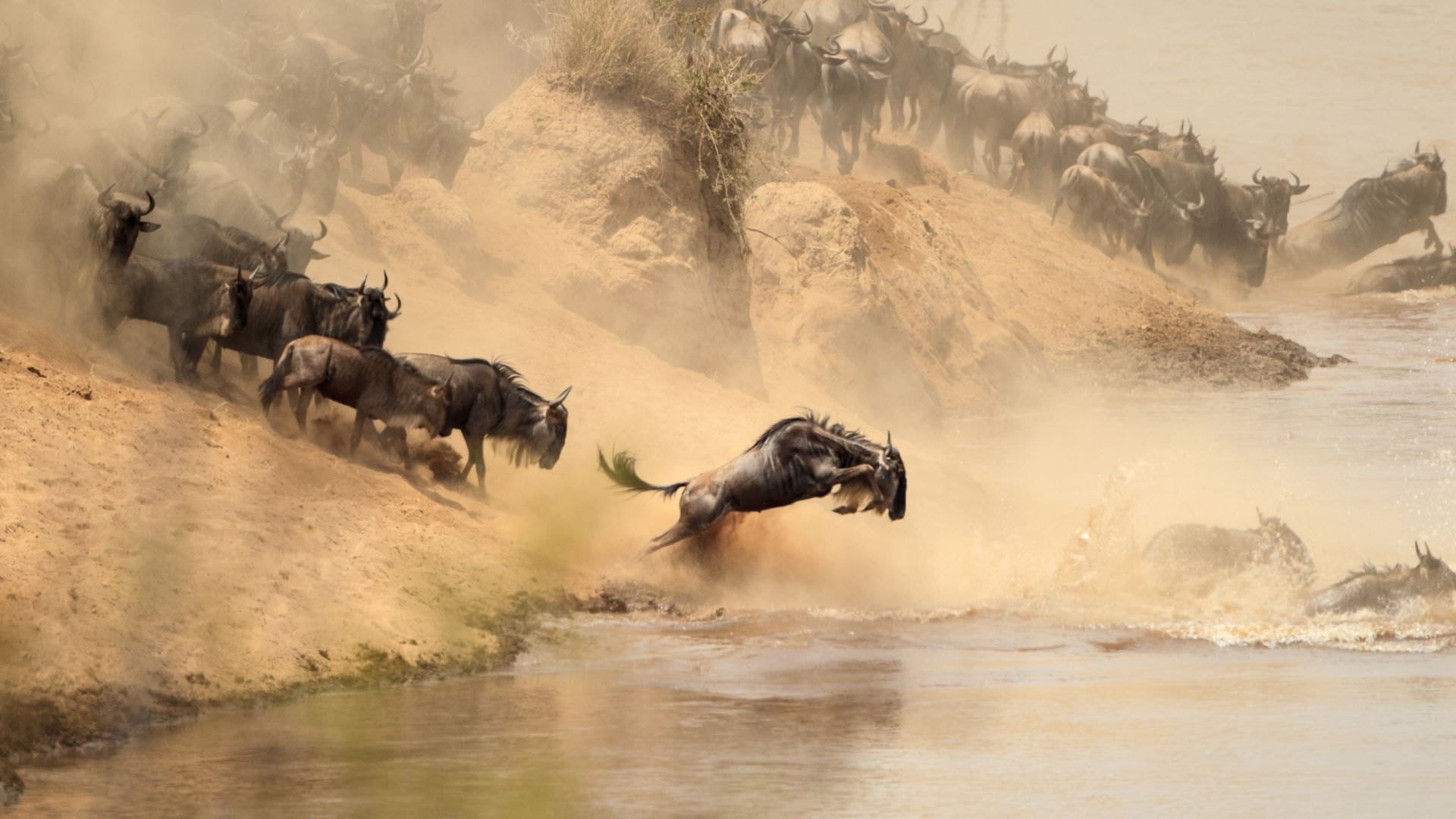
Two things are worth knowing before you go. The crossings do not run to a timetable: the herds might cross several times in one day, then hang back for days. And the migration does not cross once and settle. It moves back and forth across the river, and across the border, as the grazing changes. So we build these trips around the wait, with enough nights in the right place that your safari holds its value whether the herds cross on day 1 or day 4.
You can watch the crossings from either side. The northern Serengeti in Tanzania and the private conservancies around the Maasai Mara in Kenya each have their strengths, and many of our migration trips use both. Our Kenya guide explains why we usually prefer the conservancies to the main reserve.
Where does the migration go in October and November?
As the short rains begin, the herds leave the north and start heading south again, usually down the eastern side of the Serengeti. November is a month of transition. The migration is spread out and moving, which makes it harder to plan around, but the first rains bring the country back to life and there are fewer visitors about. By December the first herds are back on the southern plains, and the whole loop begins again.
The Great Migration year at a glance
| When | Where the herds tend to be | What to expect |
|---|---|---|
| December to March | Southern Serengeti and Ndutu | Calving, newborns and strong predator action |
| April to May | Central Serengeti, moving north-west | Long rains, the rut, green country, few visitors |
| June to July | Western corridor | Grumeti River crossings, fewer vehicles |
| Late July to October | Northern Serengeti and Maasai Mara | Mara River crossings, busiest season |
| October to November | Eastern Serengeti, heading south | Short rains, herds on the move |
How should you plan a Great Migration safari?
We start with the chapter you most want to see, then choose where you will sleep. For calving, that means lodges on or close to the southern plains. For the crossings, it means lodges within easy reach of the Grumeti or the Mara, depending on the month. Seasonal lodges that relocate with the herds make a real difference here, because your game drives start close to the animals instead of a long drive away.
We also plan for the herds being early or late. That usually means enough nights in one area for the timing to come right, and sometimes a second area as a back-up. Our guide to how long a safari should be explains the thinking. Most migration trips pair beautifully with the Ngorongoro Crater or a few days on the coast, and our Tanzania guide shows how those pieces fit together.
If you already know when you can travel, our Great Migration safaris page shows the windows we plan most often. If you do not, tell us what you most want to see, and we will tell you honestly which month gives you the best chance of seeing it.
Frequently asked questions about the Great Migration
What is the best month to see the Great Migration?
It depends on what you want to see. For calving and predator action, late January and February in the southern Serengeti. For the Mara River crossings, August and September, with late July and October on either side. There are herds somewhere in the ecosystem every month, so the better question is which part of the story you want.
Is the Great Migration in Kenya or Tanzania?
Both. The herds spend most of the year in Tanzania's Serengeti and move into Kenya's Maasai Mara from around late July to October. Many of the best migration trips use both sides of the border.
Can you guarantee a river crossing?
No one honestly can. The herds cross when they are ready, sometimes several times in a day and sometimes not for days. We plan enough nights close to the river to give you a strong chance, and we set expectations clearly before you go.
What is the difference between the Grumeti and Mara River crossings?
The Grumeti crossings happen first, around June and July, in the Serengeti's western corridor. The river is smaller, the crossings are less predictable and there are usually fewer vehicles. The Mara crossings run from late July to October on the Tanzania and Kenya border, and they are bigger and busier.
What is calving season?
Calving season is when the wildebeest give birth on the short-grass plains of the southern Serengeti, usually peaking in late January and February. The young animals draw predators, so it is one of the most active times of year for game viewing, and often quieter than the crossing season.
What is the wildebeest rut?
The rut is the mating season, which runs through May and into June as the herds move through the central and western Serengeti. Bulls hold small territories and fight over females, and the plains are loud with their calls.
Is the migration worth seeing in April and May?
It can be, if you are relaxed about the weather and the exact sightings. The long rains make the country green and quiet, and some lodges close for part of the period. The herds are spread out and moving, so it suits flexible travellers more than first-timers with one clear goal.
When is the best time to see the migration without the crowds?
Calving season in the southern Serengeti, from December to March, usually has fewer vehicles than the north during the crossings. The Grumeti crossings in June and July are quieter too, and April and May bring the Serengeti at its greenest with far fewer people in it. If you want the Mara crossings, the private conservancies around the Maasai Mara are calmer than the main reserve.
Where should we stay to see the Great Migration?
It depends on the month. For calving, lodges on or close to the southern plains. For the crossings, lodges within easy reach of the Grumeti or the Mara River. Seasonal lodges that relocate with the herds mean your game drives start close to the animals.
How many nights do I need for a migration safari?
We usually recommend at least 5 nights in one migration area, so there is room for the timing and the weather to come right. Many travellers add a second area or a few nights elsewhere in Tanzania or Kenya.
Sian Loehrer is co-founder of Marula Hill Travel. She and Vikki Jackson live in the South African Lowveld and plan boutique safaris across Southern and East Africa. We have stayed in many of the lodges we recommend, we know the rest through partners we trust, and we will always tell you which is which.
If this resonated
The bush has been expecting you
Start with a conversation. We will ask what makes you want to wake up at four-thirty, and build from there.
Begin a conversation
Walking safari: why you see Africa differently on foot
You cover less ground on foot, and somehow you see much more.

Planning your first safari? Start with the people who can hear the hyenas
What we would tell you about your first safari if you sat down at our kitchen table. There is usually gin.

What we would tell a young woman starting out in safari travel
Both of us came out of corporate, one of us with travel experience already. This is the advice we give when a young woman writes and asks how to build a career in luxury safari travel.

Botswana has water again. Here is what that means for your safari.
Botswana is having a stronger water year. Here is what that changes, and why the right lodge and the right week still matter more than a brochure month.

18 On The Hill: our stay at a tented lodge in the Greater Kruger
We stayed at 18 On The Hill, a luxury tented lodge in the Greater Kruger. The food, the suites, a kosher kitchen and drives that never felt the same twice.

Royal Malewane reopens: what we remember, and what the fact sheet confirms
The original Royal Portfolio property is back after months behind scaffolding. We haven't seen it yet. Here is what we know anyway.

We run on solar and we have not printed since 2019
Vikki and Sian on solar power, paper, and what a small safari company can honestly claim.

Sandringham Private Game Reserve: should you go early, or wait?
Greater Kruger's newest reserve opens in August 2026. Our honest take on who should book Sandringham early, and who should give it a few seasons.

How do you want to feel when you get home?
Why we plan safaris around how you want to feel when you get home, not around a pin on the map.

South Africa's online traveller declaration: what it means for your safari (and what it doesn't)
A five-minute customs form now stands between you and the arrivals hall. Here's what it is, who needs it, and what nothing to declare actually means for a normal safari guest.

Safari After Dark
Night drives reveal a different Africa. Quieter, older, more deliberate. Here's what we love about the bush after the sun goes down.

How we tailor every Marula Hill safari
We don't start with destinations. We start with you: your pace, your family, your idea of a good day in the bush.

When space teaches: what Saseka's refresh tells us about gathering in the bush
What a thoughtful safari lodge refresh tells us about gathering in the bush.

Inside FedAir's new Baobab lounge at Hoedspruit
The new Baobab lounge at Hoedspruit airport changes how a safari begins. Vikki Jackson on the room that holds you before the bush does.

How safari pricing works: where the money goes
From the people who build the quotes. Where every part of the money lands, what a cheaper quote usually leaves out, and how to spend it well.

Monwana, and what coming home actually means
By Vikki Jackson and Sian Loehrer. A week at the Thornybush lodge that has built its whole identity around the word home, and what we found when we tested it against the room, the drives, the afternoons and the bill.

The Mozambique dhow: a slow boat at the end of a fast trip
Why we put a dhow afternoon into almost every Mozambique trip. Sail, salt water and the long breath out after safari.

Why we built the Antarctica page
A short note from Sian on why an African safari business added Antarctica to its destination map, and how we handle a trip neither founder has yet made.

Lion Sands Ivory Lodge. What their redesign gets right
I visited Lion Sands Ivory Lodge in the Sabi Sand. The redesigned spaces are quiet, bold, and rare. Here is what they got right.

Bazaruto vs Quirimbas: which Mozambique archipelago is right for you?
How to choose between Mozambique's two great archipelagos for a bush-and-beach trip. Geography, lodge feel, when to go.

Sabi Sand or Kruger
Two reserves, one fence line, very different mornings

What is the best month to visit Cape Town?
Cape Town rewards you differently in every season, but March to May is the window most of our clients come back to.

What Singita Lebombo's 2026 redesign tells us
Lebombo reopened March 2026 warmer, quieter, more art-led

Gorilla trekking, Uganda or Rwanda
Two countries, the same forest, two very different days

Do you need travel insurance for a safari
What safari travel insurance must cover, and why standard policies fall short
