
Which malaria-free reserve in South Africa suits your group?
Big Five reserves in South Africa where no malaria prophylaxis is needed

South Africa has malaria-free reserves where you can see the Big Five without thinking twice about tablets. That matters more than most guides let on. The anti-malarials that work here have real side effects, and the options narrow for young children and in pregnancy. A malaria-free reserve takes that whole calculation off the table.
The question we hear most often isn't which reserve. It's whether the tablets are really necessary, and that depends entirely on where you go. For some travellers it isn't a preference at all, because someone in the group is pregnant or on medication that doesn't sit well with prophylaxis. For everyone else it's about headspace. Families who aren't counting pills tend to settle in faster.
The main malaria-free Big Five areas fall into two clusters. Within reach of Johannesburg are Madikwe, Welgevonden, Marataba and Pilanesberg. In the Eastern Cape are Shamwari, Kwandwe, Samara, Amakhala and Lalibela. Each cluster has a different character and different strengths for families.
Madikwe Game Reserve
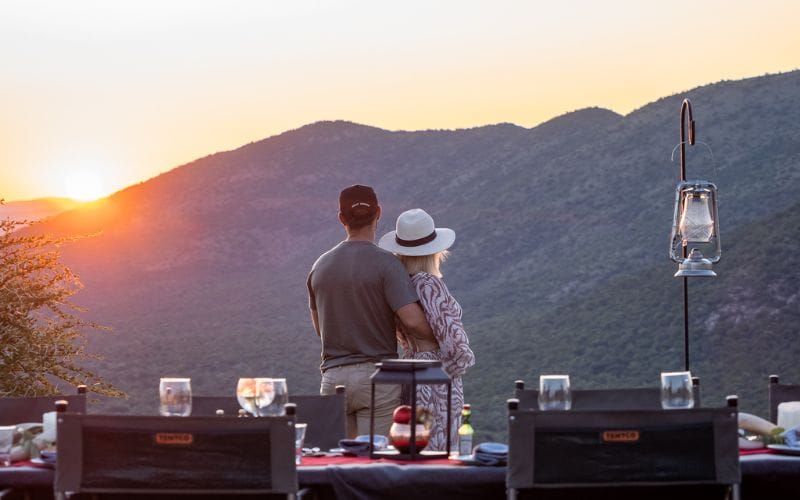
Madikwe is the reserve we most often recommend to families with young children. It sits in the North West province near the Botswana border, a few hours' drive from Johannesburg or a short charter flight. It is large enough that lodges feel properly private, but manageable for a first Big Five safari.
All of the Big Five are here, and wild dogs are a real possibility. They are wonderful with children: they move fast, they're social, and a pack is easy to follow from a game viewer. What you won't find is the open floodplain of the Okavango Delta. Madikwe is bushveld, drier and more contained. For that comparison, see our guide to Botswana family safaris.
Lodges range from family-friendly properties with children's programmes to smaller, more private lodges. Many families book a private vehicle, so the pace of the morning drive is theirs rather than the group's. Families with toddlers generally do better here than in the Eastern Cape because the journey from Johannesburg is shorter.
Welgevonden Game Reserve
Welgevonden is in the Waterberg in Limpopo, inside the Waterberg Biosphere Reserve and an easy drive from Johannesburg. It is malaria-free, Big Five and far less visited than Madikwe or Kruger. The landscape is different from classic bushveld, with rocky ridges, forested kloofs and wide valleys. Lodges tend to be small and quiet. For two or three nights it is often our first suggestion, and it suits couples and families with older children who want a proper Big Five experience away from the crowds.
Marataba
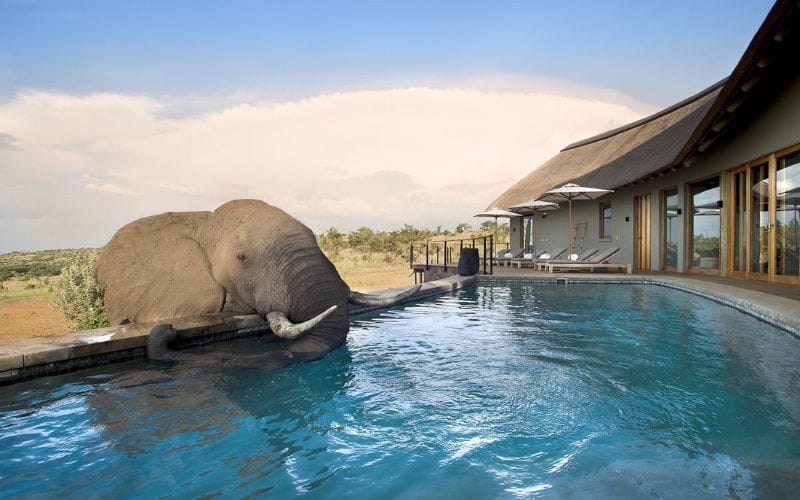
Marataba sits within Marakele National Park, also in the Waterberg. Mountains, rivers and thick bush make it look quite unlike the other reserves here. It is also the reserve we suggest most often for kosher-observant guests. Marataba Safari Lodge has a dedicated kosher kitchen with separate meat and dairy areas, and its ingredients come from Beth Din-approved suppliers. Supervision can be arranged, and we confirm the current arrangements with the lodge before every booking. More on how that works for Jewish travellers seeking a kosher safari.
Pilanesberg National Park
Pilanesberg sits inside an ancient volcanic crater and is one of the easiest malaria-free Big Five reserves to reach from Johannesburg. It is a national park, so self-driving is allowed, and accommodation ranges from simple stays to private lodges. Game density is lower than Madikwe and the roads can be busy at weekends and in school holidays. It suits a short break or a trip combined with Sun City. For more seclusion and better guiding, stay at a private lodge in the reserve.
The Eastern Cape reserves
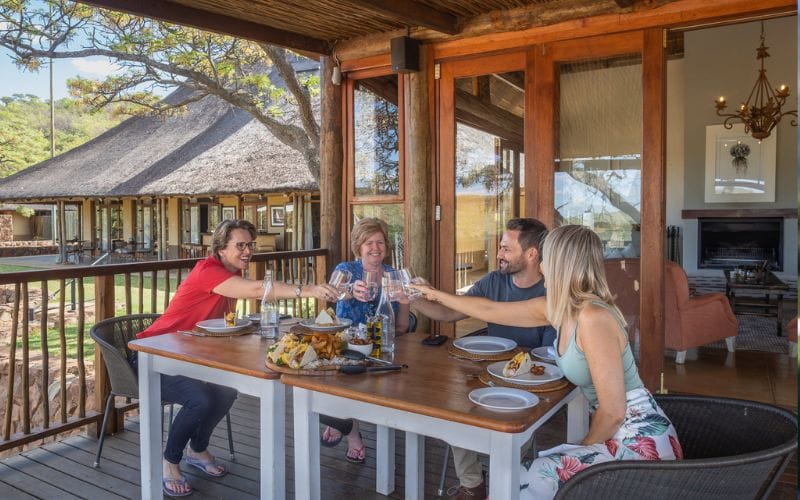
The Eastern Cape reserves usually mean a flight to Gqeberha or East London rather than a road transfer. In return you get a greener landscape, a milder climate and a different mix of species, and they slot neatly into a longer trip with Cape Town or the Garden Route. The Big Five are present across this cluster.
Shamwari is one of the largest private reserves in the Eastern Cape, with lodges from family-friendly to smaller and more exclusive. Its children's programmes and wildlife rehabilitation work make it a steady choice for multi-generational groups. It comes second to Madikwe for families with toddlers, mainly because of the longer journey.
Kwandwe is smaller, quieter and more exclusive, and takes fewer guests at any one time than Shamwari. Sightings are strong across the Big Five. It is better suited to couples and families with older children.
Samara Karoo Reserve is semi-desert Karoo, a sharp contrast to the dense bush of Shamwari or Madikwe. It carries the Big Five, but the sighting people remember here is cheetah, part of a long-running rewilding project.
Amakhala and Lalibela are smaller Eastern Cape reserves with the Big Five, and their lodges are more accessibly priced than the top lodges at Kwandwe or Shamwari. Lalibela has a good reputation for family-focused guiding.
Malaria-free does not mean compromise-free
It's worth being honest about one thing. If you have seen the Okavango Delta in flood, or watched leopard in the riverine thicket of the Sabi Sand, a malaria-free reserve will feel different. The Sabi Sand and Kruger are both in a malaria area, and the leopard viewing there is hard to match anywhere malaria-free. If that is where you most want to go, we'll help you go safely, with proper prophylaxis and sensible precautions. More on why in our comparison of Sabi Sand and Kruger.
That said, these reserves are not consolation prizes. Wild dogs at Madikwe and cheetah on open ground at Samara are memorable in their own right. For a family with a two-year-old and a pregnant mother, no prophylaxis at all is worth a great deal. We cover the full planning approach in how we plan a luxury African safari.
On cost, malaria-free reserves span a wide range. Some of South Africa's most expensive lodges are in the Eastern Cape, while others, particularly in Pilanesberg, are affordable by comparison. See what a luxury safari actually costs for a realistic breakdown.
How to choose
We always start with two questions: how long you have, and who is travelling.
For two or three nights, Welgevonden.
For families who want a full week, wild dogs and activities built around children, Madikwe.
For kosher-observant guests, Marataba.
For anyone pairing safari with Cape Town or the Garden Route, Shamwari or Kwandwe.
For a multi-generational group where some want shorter drives and others want the full day out, Madikwe or Marataba.
Once you know which reserve suits your group, our malaria-free safari page shows how we shape the trip around it.
When to go
The dry winter months usually give the easiest game viewing. The bush thins, animals gather around water and sightings become more predictable. Winter dawns in the Waterberg can be properly cold, so bring layers. The first rains bring new calves and a softer light, and summer is hot, green and quieter at most private reserves. None of this changes the malaria-free status, which stays the same all year.
Common questions
Which malaria-free reserve is best for families with young children?
Madikwe is the first choice for most families with toddlers. The journey from Johannesburg is shorter than to the Eastern Cape, it carries the Big Five with a real chance of wild dogs, and its lodges offer good children's programmes. Shamwari is a strong second, though it usually means a flight to Gqeberha.
Do malaria-free reserves in South Africa have the Big Five?
Yes. Madikwe, Welgevonden, Marataba, Pilanesberg, Shamwari, Kwandwe, Samara, Amakhala and Lalibela all carry the Big Five. Sightings vary by reserve and season, but you don't have to give up the core wildlife list to stay malaria-free.
What malaria risk do Kruger and the Sabi Sand carry?
Both Kruger National Park and the Sabi Sand are in a malaria area, and prophylaxis is usually recommended. Some options aren't suitable for young children or in pregnancy, so check with your doctor or a travel clinic. If that applies to your group, a malaria-free reserve is the right call.
Is the wildlife experience different in malaria-free areas?
Yes, to a degree. The Sabi Sand is hard to match for leopard in thick bush, and the Okavango offers a floodplain these reserves can't replicate. But Madikwe gives you a real chance of wild dogs, and the Eastern Cape reserves deliver reliable Big Five sightings. For families where safety is the deciding factor, the experience holds up well.
Are there malaria-free reserves near Johannesburg?
Yes. Pilanesberg, Welgevonden, Marataba and Madikwe are all Big Five, malaria-free and within a few hours' drive of Johannesburg. Madikwe is also a short charter flight away.
The malaria-free reserves are a practical choice, and for the right group they are simply the right choice. If you are putting a trip together and want to weigh up the options, start here.
If this resonated
The bush has been expecting you
Start with a conversation. We will ask what makes you want to wake up at four-thirty, and build from there.
Begin a conversation
What happens if an elephant charges your safari vehicle?
Almost always, nothing. How to tell a mock charge from a real one, what makes elephants nervous, and what to do in the vehicle.

When does the woodland kingfisher arrive in the Greater Kruger?
Usually around mid-November, after the first rains. Our favourite summer bird, how to recognise its call, and the other migrants that arrive with it.

What do animals do when Kruger hits 41°C?
Mostly, they do less. How the animals of the Greater Kruger handle a heatwave, and what it means for your game drives.

Can you keep halal on safari in South Africa?
Yes, with planning. How halal works at South African safari lodges, from certified meat to prayer times on game drives.

Madikwe or Kruger? Emery Hassall explains
Madikwe isn't a smaller Kruger. Emery Hassall of Madikwe Safari Lodge explains why it works best alongside one.

Amarula fudge: a taste of the Lowveld to make at home
Four ingredients, one heavy pot and a bit of patience. Here's the fudge, and the tree behind it.

Serondella Safari Lodge: our review
Four suites beside a Thornybush waterhole that rarely sits still. We have stayed twice, and it keeps earning its place on our shortlist.

Christmas on safari in South Africa: is it too late to book?
Christmas in the bush is hot and green, with baby animals everywhere. Here is what the festive season is really like, and how to find space at this stage.

Michelin Keys on safari: what they tell you, and what they don't
A Michelin Key tells you a lodge is a remarkable place to stay. It can't tell you how good the safari will be. Here is how to use one.

BA's new Tanzania flights: how to build a safari and Zanzibar trip that flows
Fly into the safari, fly home from the beach. How to use BA's new Tanzania route without spending half your holiday in transit.

How to read a safari quote: what all-inclusive really covers
Two quotes for the same week can sit a long way apart and both be honest. Here is what each line covers, what all-inclusive really means, and where the differences hide.

Safari specialist or big operator: who should plan your safari?
A fair look at when a large safari operator is the better call, when a small specialist is, when to book direct, and what to ask any of them before you pay.

Kruger park fees are going up: what it means for your safari quote
New Kruger fees start on 1 November. Here is who actually pays them, and why most Greater Kruger guests pay a reserve levy instead.

Greater Kruger in summer: is a hot, dry season still worth it?
A hotter, drier summer is on the cards. Here is what that means for your days in the bush, from people who live here.

Gay travel in South Africa: an honest safari and city guide
Cape Town, Johannesburg and the bush: an honest guide for gay and lesbian couples planning South Africa.

Where the herds are: the Great Migration month by month
The migration moves all year. Here is where the herds tend to be in each season, and how we plan a trip around them.

Walking safari: why you see Africa differently on foot
You cover less ground on foot, and somehow you see much more.

Planning your first safari? Start with the people who can hear the hyenas
What we would tell you about your first safari if you sat down at our kitchen table. There is usually gin.

What we would tell a young woman starting out in safari travel
Both of us came out of corporate, one of us with travel experience already. This is the advice we give when a young woman writes and asks how to build a career in luxury safari travel.

Is a safari safe for gay and lesbian couples?
An honest, country-by-country answer for same-sex couples planning a safari.

Botswana has water again. Here is what that means for your safari.
Botswana is having a stronger water year. Here is what that changes, and why the right lodge and the right week still matter more than a brochure month.

18 On The Hill: our stay at a tented lodge in the Greater Kruger
We stayed at 18 On The Hill, a luxury tented lodge in the Greater Kruger. The food, the suites, a kosher kitchen and drives that never felt the same twice.

Royal Malewane reopens: what we remember, and what the fact sheet confirms
The original Royal Portfolio property is back after months behind scaffolding. We haven't seen it yet. Here is what we know anyway.

We run on solar and we have not printed since 2019
Vikki and Sian on solar power, paper, and what a small safari company can honestly claim.

Sandringham Private Game Reserve: should you go early, or wait?
Greater Kruger's newest reserve opens in August 2026. Our honest take on who should book Sandringham early, and who should give it a few seasons.
