
Sabi Sand Game Reserve: South Africa's leopard country
The Sabi Sand has the highest leopard density of any protected area in South Africa. Here's what makes it genuinely different, and how we plan trips here.

The tracker cuts the engine and the bush falls quiet. You're sitting in an open vehicle in the Lowveld half-dark, watching a leopard move through the knobthorn scrub ten metres off the road. She's not hiding. She barely notices you're there. That kind of sighting, in that kind of light, at that kind of distance, is why people come to the Sabi Sand.
Not for a glimpse. For this.
What makes the Sabi Sand different
The Sabi Sand sits on the southwest corner of the Kruger National Park, about 65,000 hectares of private reserve land in Mpumalanga's Lowveld. The fence between the Sabi Sand and Kruger came down in 1993, and animals have moved freely between the two ever since. That matters for game viewing. A leopard raised in the Sabi Sand can range into Kruger and back without obstruction, and wildlife crossing in from Kruger adds to what's already an exceptionally dense population.
The two rivers the reserve is named after, the Sabie and the Sand, run through the land year-round. That permanent water keeps game resident rather than migratory, which is part of why the sightings here are so consistent.
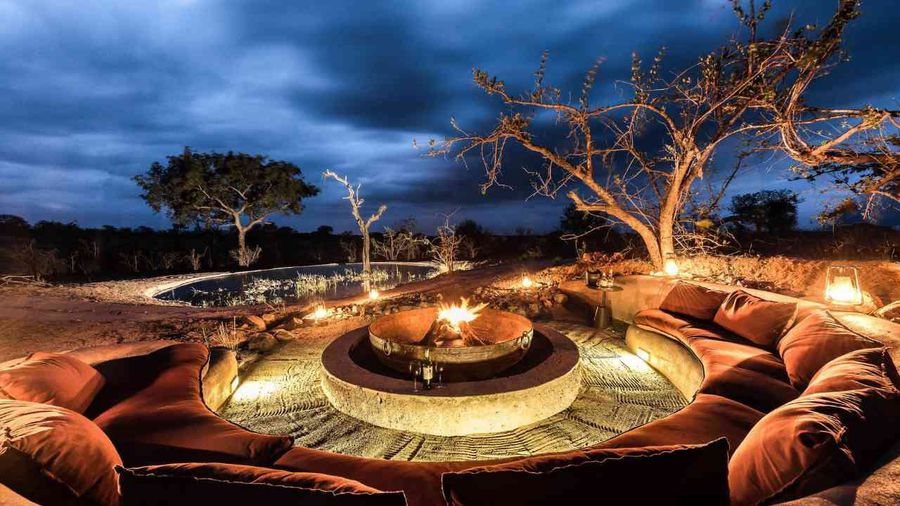
The leopard numbers
Singita, in partnership with Panthera, ran a camera trap survey across the reserve and found 12.2 leopards per 100 square kilometres. That figure, confirmed against previous studies, makes the Sabi Sand the highest-density leopard habitat of any protected area surveyed in South Africa. Not just high. The upper threshold of what leopard ecology can sustain.
What that means on the ground is that a leopard sighting here is not a lucky day. On a four-night stay with twice-daily drives, most guests see leopard more than once, often at close range, sometimes watching a kill or a cub.
The animals are habituated to vehicles. Decades of careful, consistent game viewing practices have produced leopards that treat an open Land Cruiser as furniture. When the Shangaan trackers who work alongside guides in these vehicles follow a leopard off-road through the mopane, the cat rarely breaks stride.
The lodges that define the reserve
Londolozi, on the banks of the Sand River, has been privately owned by the Varty family since 1926. In 1993 Londolozi's Tree Camp became the first safari lodge in Africa to receive Relais & Châteaux status. The five camps sit close to each other along the riverline, and the guiding here is some of the most knowledgeable we've seen anywhere in South Africa.
Singita has operated in the Sabi Sand since 1993. The conservation focus is serious. Their biodiversity team runs ongoing monitoring of leopard, rhino, wild dog, and lion populations, and the guiding reflects that depth of knowledge.
Sabi Sabi Earth Lodge is built differently. The architecture sits below ground level, sunken into a slope of the hillside, with a waterhole visible from the main dining area. It draws a specific kind of guest. People who want less of the conventional lodge aesthetic and more of something that feels like the bush itself.
Dulini River Lodge sits on the western side of the reserve, raised above the Sand River on a low bank. The game viewing from the deck is worth the trip alone, and the guides work 10,500 hectares of some of the best traversing in the reserve.
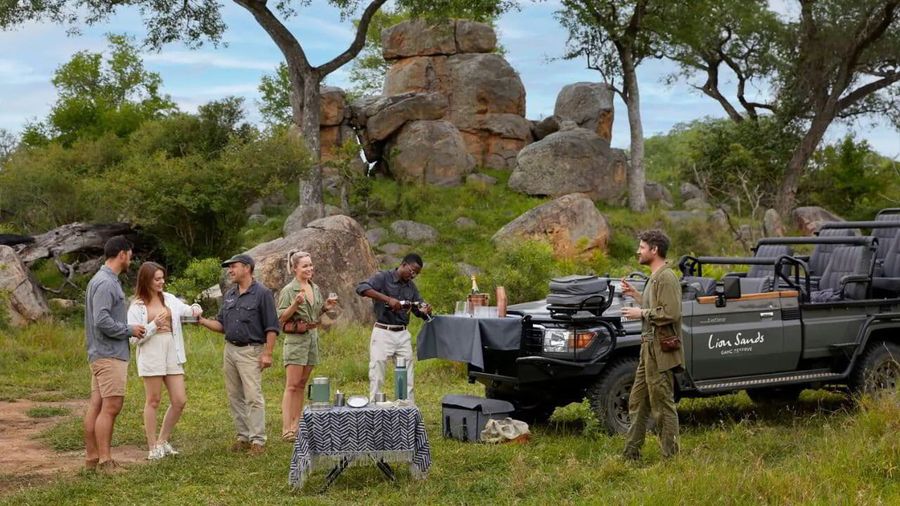
What a game drive actually looks like here
Drives go out twice a day: early morning and late afternoon into dark. In the Sabi Sand, guides can take vehicles off-road to follow animals, which makes a real difference when a leopard or lion moves into thick cover.
The Shangaan trackers reading spoor from the front seat of the vehicle are often the difference between finding an animal and not. This is a long-taught skill. Watching a good tracker read the ground is as interesting as any wildlife encounter.
Night drives run in most camps, and these are worth prioritising. The Lowveld after dark produces things you won't find on a daytime drive: civets, genets, honey badgers, the occasional aardvark moving across a dry riverbed.
When to go
The Sabi Sand rewards a visit in any season, but the dry winter months from May to September offer the clearest game viewing. Vegetation thins out, animals concentrate around water, and the Lowveld light in June and July is cold and gold. Mornings on the vehicle require a blanket; by midday the temperature has climbed back into the twenties.
The wet season from November through March brings green bush, good birding, and the chance of seeing newborn impala in late November and December. Leopard sightings don't drop off significantly in summer. The animals are there regardless of season; it's the visibility that changes.
How we plan Sabi Sand trips
Most of our guests spend four to five nights in the Sabi Sand, long enough to fall properly into the pace of drives and have a genuine range of sightings. We often pair it with a contrasting destination, a coastal stay in the Western Cape or a few nights at a different reserve type, to give a trip some shape and variety.
The reserve can work well as a standalone if someone is on a short trip to South Africa and wants to put most of their time on game viewing. The airstrip at Sabi Sand is served from Johannesburg and Skukuza, so it's a short flight from the city with no significant driving.
Lodge selection matters here more than in some destinations. The traversing areas, guiding quality, and lodge character vary enough that the right fit depends on what a guest is actually looking for. It's the kind of conversation we find useful to have before booking.
If you're putting together a South Africa trip and want to talk through your options, get in touch with our team. We know these lodges well, and we know which ones suit which people.
See also: Ximuwu.
If this resonated
The bush has been expecting you
Start with a conversation. We will ask what makes you want to wake up at four-thirty, and build from there.
Begin a conversation
What happens if an elephant charges your safari vehicle?
Almost always, nothing. How to tell a mock charge from a real one, what makes elephants nervous, and what to do in the vehicle.

When does the woodland kingfisher arrive in the Greater Kruger?
Usually around mid-November, after the first rains. Our favourite summer bird, how to recognise its call, and the other migrants that arrive with it.

What do animals do when Kruger hits 41°C?
Mostly, they do less. How the animals of the Greater Kruger handle a heatwave, and what it means for your game drives.

Can you keep halal on safari in South Africa?
Yes, with planning. How halal works at South African safari lodges, from certified meat to prayer times on game drives.

Madikwe or Kruger? Emery Hassall explains
Madikwe isn't a smaller Kruger. Emery Hassall of Madikwe Safari Lodge explains why it works best alongside one.

Amarula fudge: a taste of the Lowveld to make at home
Four ingredients, one heavy pot and a bit of patience. Here's the fudge, and the tree behind it.

Serondella Safari Lodge: our review
Four suites beside a Thornybush waterhole that rarely sits still. We have stayed twice, and it keeps earning its place on our shortlist.

Christmas on safari in South Africa: is it too late to book?
Christmas in the bush is hot and green, with baby animals everywhere. Here is what the festive season is really like, and how to find space at this stage.

Michelin Keys on safari: what they tell you, and what they don't
A Michelin Key tells you a lodge is a remarkable place to stay. It can't tell you how good the safari will be. Here is how to use one.

BA's new Tanzania flights: how to build a safari and Zanzibar trip that flows
Fly into the safari, fly home from the beach. How to use BA's new Tanzania route without spending half your holiday in transit.

How to read a safari quote: what all-inclusive really covers
Two quotes for the same week can sit a long way apart and both be honest. Here is what each line covers, what all-inclusive really means, and where the differences hide.

Safari specialist or big operator: who should plan your safari?
A fair look at when a large safari operator is the better call, when a small specialist is, when to book direct, and what to ask any of them before you pay.

Kruger park fees are going up: what it means for your safari quote
New Kruger fees start on 1 November. Here is who actually pays them, and why most Greater Kruger guests pay a reserve levy instead.

Greater Kruger in summer: is a hot, dry season still worth it?
A hotter, drier summer is on the cards. Here is what that means for your days in the bush, from people who live here.

Gay travel in South Africa: an honest safari and city guide
Cape Town, Johannesburg and the bush: an honest guide for gay and lesbian couples planning South Africa.

Where the herds are: the Great Migration month by month
The migration moves all year. Here is where the herds tend to be in each season, and how we plan a trip around them.

Walking safari: why you see Africa differently on foot
You cover less ground on foot, and somehow you see much more.

Planning your first safari? Start with the people who can hear the hyenas
What we would tell you about your first safari if you sat down at our kitchen table. There is usually gin.

What we would tell a young woman starting out in safari travel
Both of us came out of corporate, one of us with travel experience already. This is the advice we give when a young woman writes and asks how to build a career in luxury safari travel.

Is a safari safe for gay and lesbian couples?
An honest, country-by-country answer for same-sex couples planning a safari.

Botswana has water again. Here is what that means for your safari.
Botswana is having a stronger water year. Here is what that changes, and why the right lodge and the right week still matter more than a brochure month.

18 On The Hill: our stay at a tented lodge in the Greater Kruger
We stayed at 18 On The Hill, a luxury tented lodge in the Greater Kruger. The food, the suites, a kosher kitchen and drives that never felt the same twice.

Royal Malewane reopens: what we remember, and what the fact sheet confirms
The original Royal Portfolio property is back after months behind scaffolding. We haven't seen it yet. Here is what we know anyway.

We run on solar and we have not printed since 2019
Vikki and Sian on solar power, paper, and what a small safari company can honestly claim.

Sandringham Private Game Reserve: should you go early, or wait?
Greater Kruger's newest reserve opens in August 2026. Our honest take on who should book Sandringham early, and who should give it a few seasons.
