
Safari lodges are not hotels
Why the comparison falls away the moment you understand how a safari lodge actually operates

Most safari pricing confusion comes down to one mistake. Comparing safari lodges to hotels. Safari lodges are not hotels, and that misunderstanding shapes everything that follows.
Safari lodges cost more than hotels because they operate in remote wilderness areas with complex logistics, high staff-to-guest ratios, expert guiding teams, and conservation costs built into the price. You are not paying for a room. You are paying for access, expertise, and a fully designed experience.
We see it often. Travellers arrive at the early planning stage trying to benchmark safari costs against familiar travel experiences. It makes sense, until you look a little closer.
Once you understand how a safari lodge actually operates, the comparison starts to fall away.
Safari lodge vs hotel: the real difference
A hotel is designed for convenience, efficiency, and scale.
A safari lodge is designed for access. Access to wildlife, to wilderness, and to experiences that cannot exist in built environments. It brings together accommodation, guiding, dining, and conservation into one integrated offering.
This is not a variation of a hotel. It is a fundamentally different model.
If you are still early in the planning process, understanding how to choose the right safari lodge becomes an important next step. Not all lodges offer the same experience.
Why safari lodges are not like hotels
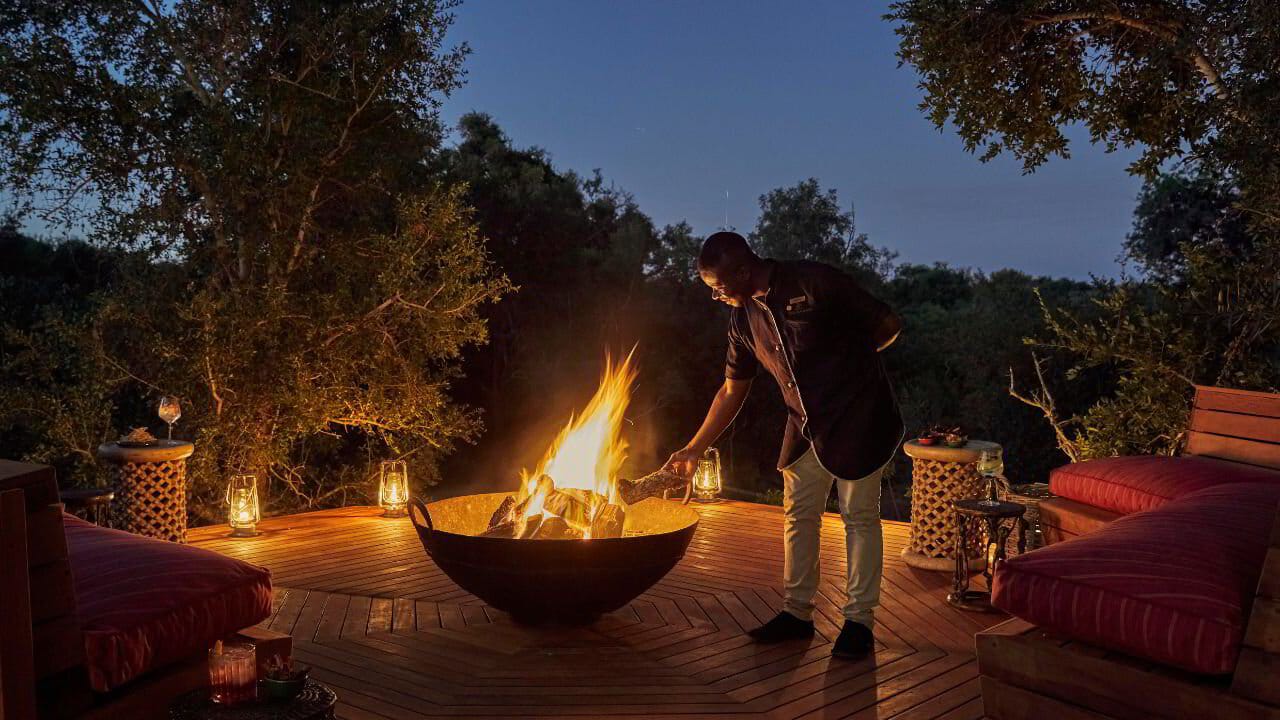
Safari lodges are intentionally small and deliberately remote. That is not a compromise, it is the reason they exist.
In our work at Marula Hill, this is where understanding begins to shift. Lodges are chosen for location, not convenience. Wildlife density, landscape, and ecosystem take priority.
That decision creates a different kind of operation:
- No nearby suppliers or infrastructure
- Power generated on-site
- Independent water and waste systems
- Supplies transported over long distances
This is hospitality operating with precision, not scale.
Why safari lodges cost more than hotels
Safari lodges are expensive because they are complex to run well.
With a limited number of rooms, costs are shared across fewer guests. At the same time, the experience is built around people and expertise. For a broader breakdown of pricing across destinations and styles, our guide on why African safaris are so expensive explores this in more detail.
What sits behind every stay includes:
- High staff-to-guest ratios for personalised service
- Skilled guides and trackers leading every activity
- Dedicated teams coordinating daily operations
- Flexible schedules shaped by wildlife, not convenience
Guiding, in particular, is central. It transforms a game drive into something meaningful. It cannot be replicated without experience.
The moment travellers understand what sits behind a safari, the people, the logistics, the conservation, the conversation shifts completely. It is no longer about price. It is about value.Vikki Jackson, Co-founder of Marula Hill
What is included in a safari lodge stay?
A safari lodge stay is typically all-inclusive, which is one of the biggest differences from a hotel.
Most stays include:
- Accommodation
- All meals
- Drinks (often including premium options)
- Daily game drives
- Guided bush walks
Guests are not paying for a room. They are stepping into a fully designed experience where everything has already been considered.
Why remote safari logistics increase costs
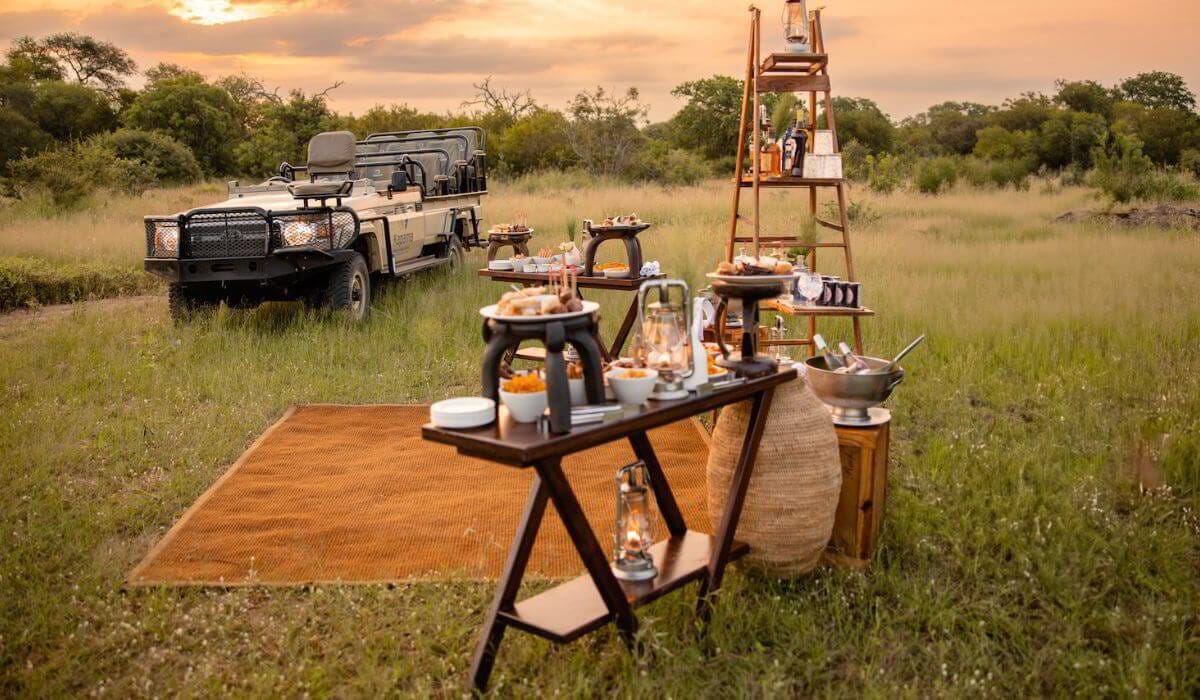
Operating in remote wilderness areas requires constant coordination.
Behind the scenes, lodges manage:
- Transporting food, beverages, and supplies over long distances
- Maintaining vehicles for rugged terrain
- Bringing in fuel where no infrastructure exists
- Supporting staff living on-site
From experience, this is one of the least visible but most defining aspects of a safari. Guests experience ease, but that ease is carefully built.
Conservation fees and private reserves
Many safari lodges operate within private reserves or conservation areas.
Part of the cost contributes directly to:
- Anti-poaching initiatives
- Habitat and wildlife management
- Community partnerships
- Long-term conservation efforts
This is not an optional extra. It is built into the structure of the safari experience.
This becomes clearer when you understand the difference between private reserves and national parks, and how each shapes the safari experience. In South Africa, the Sabi Sand is a private reserve. The Kruger National Park is a national park open to the public.
Why safari lodges have high staff-to-guest ratios
Safari lodges are built around people.
A typical stay is supported by a team that may include:
- Guides and trackers
- Chefs and kitchen teams
- Housekeeping staff
- Camp managers and operational teams
This allows for a level of attentiveness and flexibility that feels personal, and it is a key part of the overall cost.
Why the hotel comparison falls short
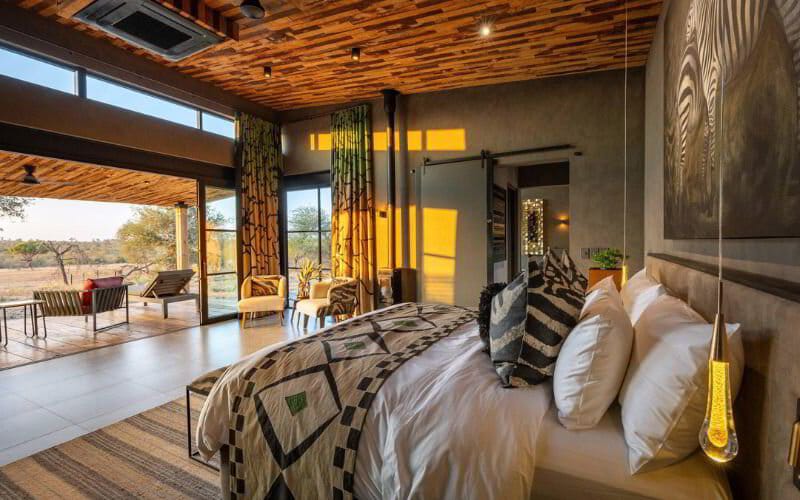
Comparing a safari lodge to a hotel simplifies something far more complex.
A hotel provides accommodation in a convenient location.
A safari lodge provides:
- Access to remote wilderness
- Guided wildlife experiences
- Integrated logistics and operations
- A fully designed trip
They are built for entirely different purposes, which is why the comparison does not hold.
Are safari lodges worth the cost?
Safari lodges are worth the cost for travellers seeking depth, not just comfort.
The value lies in:
- Access to wildlife in natural environments
- The expertise of guiding teams
- The integration of every part of the experience
- The connection to conservation and place
For many travellers, this is where the shift happens. From questioning the cost to recognising the value.
A shift in how travellers understand value
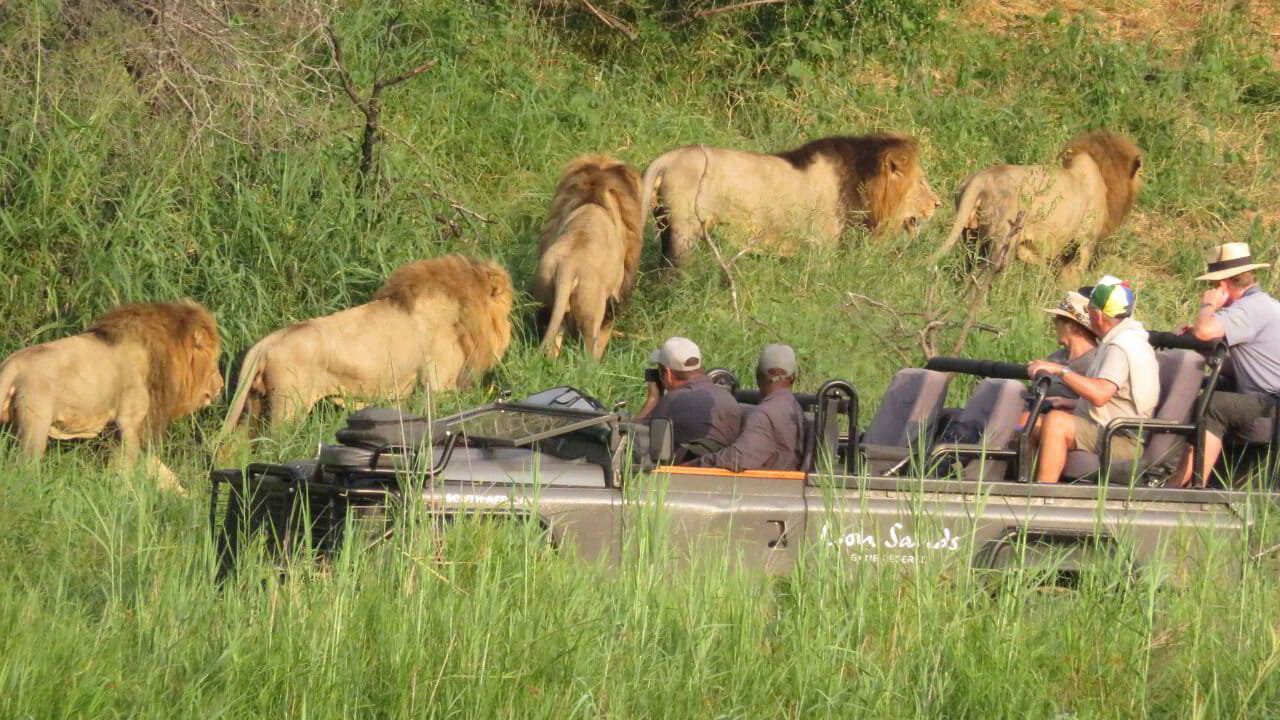
We are seeing a clear shift in how travellers approach safari pricing.
Timing also plays a role in how value is experienced, which is why understanding the best time to go on safari in Africa is an important part of planning.
Instead of focusing only on nightly rates, more travellers are considering:
- What is included
- Who is guiding them
- Where the lodge is located
- How the experience is structured
This shift moves the conversation from cost to value.
Final thought
At Marula Hill, pricing conversations often begin with comparison.
But they do not stay there.
Once you understand what goes into a safari lodge experience, it becomes clear that this is not simply a different price point. It is a fundamentally different way of travelling.
And that is why safari lodges are not hotels.
Sian Loehrer
Frequently asked questions
Why are safari lodges so expensive?
Safari lodges are expensive because they operate in remote locations with high logistics costs, expert guiding teams, high staff-to-guest ratios, and conservation fees. The price typically includes accommodation, meals, drinks, and daily activities.
What is the difference between a safari lodge and a hotel?
A safari lodge offers a fully designed, all-inclusive experience in a remote wilderness setting. A hotel provides accommodation in an accessible location with established infrastructure.
What is included in a safari lodge stay?
Most safari lodge stays include accommodation, meals, drinks, daily game drives, and guided activities, creating a fully hosted experience.
Why do safari lodges have so few rooms?
Safari lodges are intentionally small to protect the environment, maintain exclusivity, and improve wildlife experiences.
Are safari lodges all-inclusive?
Yes, most safari lodges are all-inclusive, covering accommodation, meals, drinks, and guided safari activities.
If this resonated
The bush has been expecting you
Start with a conversation. We will ask what makes you want to wake up at four-thirty, and build from there.
Begin a conversation
What happens if an elephant charges your safari vehicle?
Almost always, nothing. How to tell a mock charge from a real one, what makes elephants nervous, and what to do in the vehicle.

When does the woodland kingfisher arrive in the Greater Kruger?
Usually around mid-November, after the first rains. Our favourite summer bird, how to recognise its call, and the other migrants that arrive with it.

What do animals do when Kruger hits 41°C?
Mostly, they do less. How the animals of the Greater Kruger handle a heatwave, and what it means for your game drives.

Can you keep halal on safari in South Africa?
Yes, with planning. How halal works at South African safari lodges, from certified meat to prayer times on game drives.

Madikwe or Kruger? Emery Hassall explains
Madikwe isn't a smaller Kruger. Emery Hassall of Madikwe Safari Lodge explains why it works best alongside one.

Amarula fudge: a taste of the Lowveld to make at home
Four ingredients, one heavy pot and a bit of patience. Here's the fudge, and the tree behind it.

Serondella Safari Lodge: our review
Four suites beside a Thornybush waterhole that rarely sits still. We have stayed twice, and it keeps earning its place on our shortlist.

Christmas on safari in South Africa: is it too late to book?
Christmas in the bush is hot and green, with baby animals everywhere. Here is what the festive season is really like, and how to find space at this stage.

Michelin Keys on safari: what they tell you, and what they don't
A Michelin Key tells you a lodge is a remarkable place to stay. It can't tell you how good the safari will be. Here is how to use one.

BA's new Tanzania flights: how to build a safari and Zanzibar trip that flows
Fly into the safari, fly home from the beach. How to use BA's new Tanzania route without spending half your holiday in transit.

How to read a safari quote: what all-inclusive really covers
Two quotes for the same week can sit a long way apart and both be honest. Here is what each line covers, what all-inclusive really means, and where the differences hide.

Safari specialist or big operator: who should plan your safari?
A fair look at when a large safari operator is the better call, when a small specialist is, when to book direct, and what to ask any of them before you pay.

Kruger park fees are going up: what it means for your safari quote
New Kruger fees start on 1 November. Here is who actually pays them, and why most Greater Kruger guests pay a reserve levy instead.

Greater Kruger in summer: is a hot, dry season still worth it?
A hotter, drier summer is on the cards. Here is what that means for your days in the bush, from people who live here.

Gay travel in South Africa: an honest safari and city guide
Cape Town, Johannesburg and the bush: an honest guide for gay and lesbian couples planning South Africa.

Where the herds are: the Great Migration month by month
The migration moves all year. Here is where the herds tend to be in each season, and how we plan a trip around them.

Walking safari: why you see Africa differently on foot
You cover less ground on foot, and somehow you see much more.

Planning your first safari? Start with the people who can hear the hyenas
What we would tell you about your first safari if you sat down at our kitchen table. There is usually gin.

What we would tell a young woman starting out in safari travel
Both of us came out of corporate, one of us with travel experience already. This is the advice we give when a young woman writes and asks how to build a career in luxury safari travel.

Is a safari safe for gay and lesbian couples?
An honest, country-by-country answer for same-sex couples planning a safari.

Botswana has water again. Here is what that means for your safari.
Botswana is having a stronger water year. Here is what that changes, and why the right lodge and the right week still matter more than a brochure month.

18 On The Hill: our stay at a tented lodge in the Greater Kruger
We stayed at 18 On The Hill, a luxury tented lodge in the Greater Kruger. The food, the suites, a kosher kitchen and drives that never felt the same twice.

Royal Malewane reopens: what we remember, and what the fact sheet confirms
The original Royal Portfolio property is back after months behind scaffolding. We haven't seen it yet. Here is what we know anyway.

We run on solar and we have not printed since 2019
Vikki and Sian on solar power, paper, and what a small safari company can honestly claim.

Sandringham Private Game Reserve: should you go early, or wait?
Greater Kruger's newest reserve opens in August 2026. Our honest take on who should book Sandringham early, and who should give it a few seasons.
