
Tarangire: Tanzania's other great safari park
Huge elephant herds, ancient baobabs, and very few crowds. Here's why we include Tarangire in nearly every northern Tanzania itinerary.

The dust comes first. A fine red powder that settles on everything: your sleeve, your binoculars, the seat of the Land Cruiser, before you've even properly arrived. Then, as the vehicle crests a low ridge and the Tarangire River valley opens below you, the scale of the place hits. A hundred elephants at the water's edge. Ancient baobabs rising behind them, their swollen trunks pale against the dry season sky. Nothing moving quickly. Just the park doing what it has always done, long before anyone had a name for it.
This is why we send people to Tarangire.
What most Tanzania itineraries miss
Serengeti gets the headlines. Ngorongoro gets the photographs. And between those two giants, Tarangire has spent decades being treated as an optional extra, a one-night add-on for people with extra days to fill.
That undersells it badly.
In the dry season, from June through October, Tarangire runs one of the most concentrated wildlife gatherings anywhere in East Africa. As pans and seasonal waterholes dry across the surrounding plains, animals converge on the Tarangire River in numbers that rival anything you'll see on the northern circuit. The Silale Swamp, a permanent water source deep inside the park, pulls particular volumes of game: buffalo, zebra, wildebeest, and the elephant herds that Tarangire is rightly famous for. Up to three thousand elephants move through the park during peak dry season. After a long time planning Tanzania safaris, that figure still stops us short.
The baobabs
Serengeti gives you open sky and the sense that the plains go on past the horizon. Tarangire gives you something different. The place feels ancient in a way you can physically see.
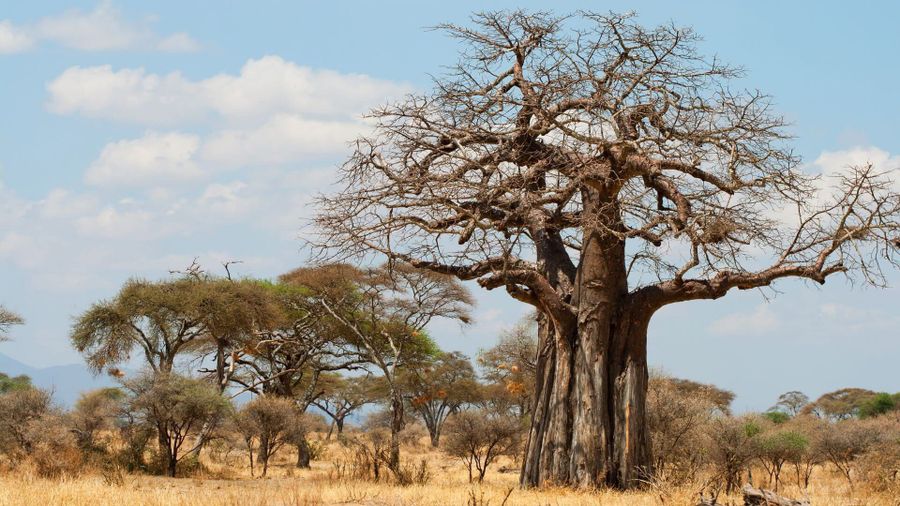
The baobabs here are enormous. Some are over a thousand years old. They grow in clusters across the park's ridges and valleys, their trunks the width of small rooms, their branches reaching in every direction without any apparent logic. At dusk, when the light turns amber and a herd drifts through a stand of them, it is the kind of thing that stays with you long after the trip is done.
It also makes for exceptional photography. The Serengeti is vast and relatively spare. Tarangire gives your lens something to do.
Beyond the game drive
Walking safaris here are worth taking seriously. Out on foot, the pace changes entirely. A guide can spend twenty minutes on a single termite mound, on what it tells you about the soil, the species that depend on it, the birds that nest in its walls. It is a completely different way of seeing a place, and Tarangire's terrain suits it well: dry riverbed scrub, open grassland, stands of acacia.
Night drives reveal a different park again. The leopards that move carefully between the baobabs in daylight are out hunting in the dark. Civets, porcupines, bush babies, the occasional aardvark working through the grass. An experienced guide with a spotlight can show you things no daytime drive ever will.
Where we stay
We work with a small number of properties in Tarangire that we know well and trust consistently.
Tarangire Treetops builds its suites around the baobabs themselves. Some rooms are literally constructed into the trees. The views across the savannah from the open decks are hard to match, and the feeling of being above the bush rather than beside it changes how you experience the place.
Lemala Mpingo Ridge sits on a ridge above the Tarangire River. Private decks with outdoor bathtubs, views down to where the elephants drink, a level of finish that punches harder than many more famous camps. We find it particularly good for couples who want seclusion without sacrificing comfort.
Both properties deliver a very different stay from the large, high-volume lodges that dominate the Serengeti's central areas. The guest numbers are smaller. The experience is quieter. That matters.
How Tarangire fits into a northern circuit
The classic northern Tanzania loop connects Tarangire, Lake Manyara, the Ngorongoro Crater, and the Serengeti. Each leg adds something the others don't have, and they work well as a sequence.
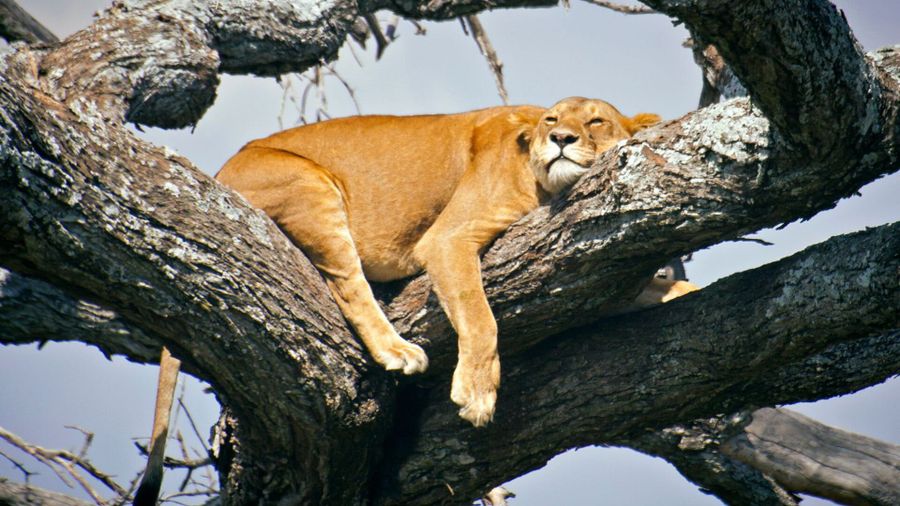
We usually recommend starting in Tarangire. The wildlife density in dry season is immediate and striking, which sets a strong tone for the rest of the trip. Lake Manyara follows well: smaller, different in character, notable for its tree-climbing lions and the flamingos that gather on the lake's edge. Then Ngorongoro, which is unlike anything else on the continent. Then the Serengeti, ideally timed around a migration crossing if the calendar allows.
Tarangire also pairs well with a South Africa leg. A few days in the Sabi Sand before or after Tanzania gives you two quite different safari ecosystems on one trip, and we put those combinations together regularly.
What to know before you go
The dry season, June to October, is when we most often recommend Tarangire. The wildlife concentrations around the river and the Silale Swamp are at their peak, the roads are in good condition, and the skies stay clear.
The green season, November through May, changes the park significantly. The vegetation fills in, the migratory birds arrive in force, and the whole place looks and feels different. Wildlife is harder to spot through the long grass, but there is real beauty in it, and the camps are less busy. It is worth considering if the timing works and you are comfortable with some trade-offs on game-viewing.
A note from us
Tarangire does not shout. It does not have the Serengeti's marketing weight or the Crater's dramatic geology. What it has is scale, depth, and a kind of unhurried quality that is harder and harder to find in East Africa's most visited parks.
If you are planning a Tanzania safari and wondering whether it belongs in your itinerary, we would say almost always yes. Get in touch and we can talk through how it might fit with what you have in mind.
If this resonated
The bush has been expecting you
Start with a conversation. We will ask what makes you want to wake up at four-thirty, and build from there.
Begin a conversation
What happens if an elephant charges your safari vehicle?
Almost always, nothing. How to tell a mock charge from a real one, what makes elephants nervous, and what to do in the vehicle.

When does the woodland kingfisher arrive in the Greater Kruger?
Usually around mid-November, after the first rains. Our favourite summer bird, how to recognise its call, and the other migrants that arrive with it.

What do animals do when Kruger hits 41°C?
Mostly, they do less. How the animals of the Greater Kruger handle a heatwave, and what it means for your game drives.

Can you keep halal on safari in South Africa?
Yes, with planning. How halal works at South African safari lodges, from certified meat to prayer times on game drives.

Madikwe or Kruger? Emery Hassall explains
Madikwe isn't a smaller Kruger. Emery Hassall of Madikwe Safari Lodge explains why it works best alongside one.

Amarula fudge: a taste of the Lowveld to make at home
Four ingredients, one heavy pot and a bit of patience. Here's the fudge, and the tree behind it.

Serondella Safari Lodge: our review
Four suites beside a Thornybush waterhole that rarely sits still. We have stayed twice, and it keeps earning its place on our shortlist.

Christmas on safari in South Africa: is it too late to book?
Christmas in the bush is hot and green, with baby animals everywhere. Here is what the festive season is really like, and how to find space at this stage.

Michelin Keys on safari: what they tell you, and what they don't
A Michelin Key tells you a lodge is a remarkable place to stay. It can't tell you how good the safari will be. Here is how to use one.

BA's new Tanzania flights: how to build a safari and Zanzibar trip that flows
Fly into the safari, fly home from the beach. How to use BA's new Tanzania route without spending half your holiday in transit.

How to read a safari quote: what all-inclusive really covers
Two quotes for the same week can sit a long way apart and both be honest. Here is what each line covers, what all-inclusive really means, and where the differences hide.

Safari specialist or big operator: who should plan your safari?
A fair look at when a large safari operator is the better call, when a small specialist is, when to book direct, and what to ask any of them before you pay.

Kruger park fees are going up: what it means for your safari quote
New Kruger fees start on 1 November. Here is who actually pays them, and why most Greater Kruger guests pay a reserve levy instead.

Greater Kruger in summer: is a hot, dry season still worth it?
A hotter, drier summer is on the cards. Here is what that means for your days in the bush, from people who live here.

Gay travel in South Africa: an honest safari and city guide
Cape Town, Johannesburg and the bush: an honest guide for gay and lesbian couples planning South Africa.

Where the herds are: the Great Migration month by month
The migration moves all year. Here is where the herds tend to be in each season, and how we plan a trip around them.

Walking safari: why you see Africa differently on foot
You cover less ground on foot, and somehow you see much more.

Planning your first safari? Start with the people who can hear the hyenas
What we would tell you about your first safari if you sat down at our kitchen table. There is usually gin.

What we would tell a young woman starting out in safari travel
Both of us came out of corporate, one of us with travel experience already. This is the advice we give when a young woman writes and asks how to build a career in luxury safari travel.

Is a safari safe for gay and lesbian couples?
An honest, country-by-country answer for same-sex couples planning a safari.

Botswana has water again. Here is what that means for your safari.
Botswana is having a stronger water year. Here is what that changes, and why the right lodge and the right week still matter more than a brochure month.

18 On The Hill: our stay at a tented lodge in the Greater Kruger
We stayed at 18 On The Hill, a luxury tented lodge in the Greater Kruger. The food, the suites, a kosher kitchen and drives that never felt the same twice.

Royal Malewane reopens: what we remember, and what the fact sheet confirms
The original Royal Portfolio property is back after months behind scaffolding. We haven't seen it yet. Here is what we know anyway.

We run on solar and we have not printed since 2019
Vikki and Sian on solar power, paper, and what a small safari company can honestly claim.

Sandringham Private Game Reserve: should you go early, or wait?
Greater Kruger's newest reserve opens in August 2026. Our honest take on who should book Sandringham early, and who should give it a few seasons.
