
The plight of the African wild dog
Around 6,600 painted dogs are left in the wild, and they are among the most endangered carnivores on the continent. Here is what is actually happening to them, and what we do about it
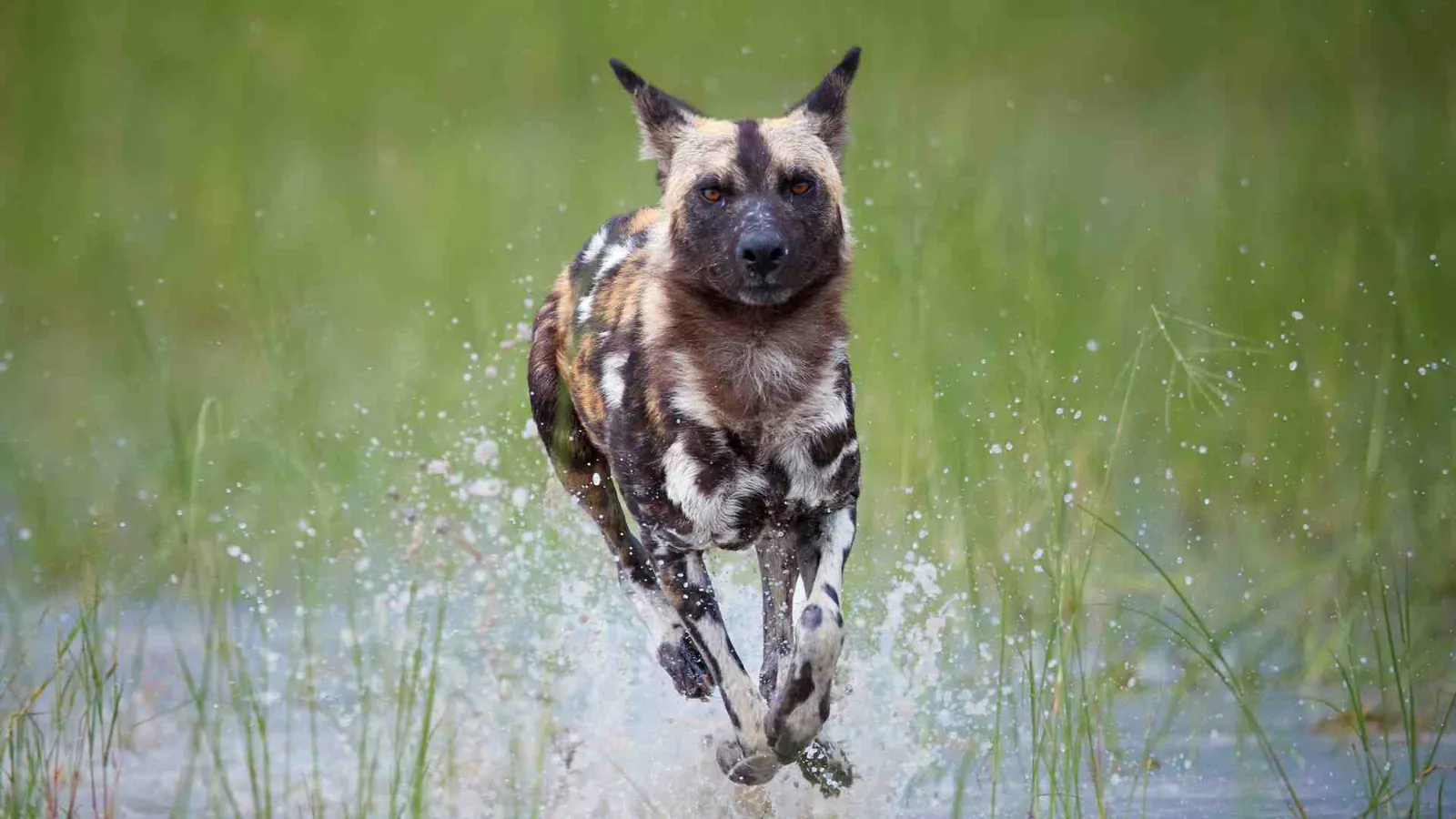
When most people picture African wildlife, the cast is familiar. Lions. Elephants. Giraffes. The painted dog rarely makes the list, and that is partly the problem. You cannot fund the protection of an animal nobody knows about.
Africa's painted dogs are quietly disappearing. Around 6,600 are left in the wild at the most recent formal count, which makes them one of Africa's most endangered large carnivores. This is what is actually killing them, what the people working to save them are doing, and how we contribute.
So this post is for the animal almost nobody asks for on safari.
The species, in plain numbers
The African wild dog goes by several names. Painted dog. Cape hunting dog. Lycaon pictus if you want the Latin. They are the only living member of their genus, which means if we lose them, a whole branch of the evolutionary tree goes with them.
Around 6,600 remain in the wild. That number has been falling for decades. The IUCN classifies them as endangered, and many population biologists now consider that classification optimistic.
They live in packs of up to thirty, led by a breeding pair. They are among the most successful hunters on the continent. Published field studies put their success rate at close to half the hunts they commit to, well ahead of most large predators. They are also one of the most cooperative social animals in Africa. Pups eat first. Injured pack members are fed. Old dogs are looked after.
Painted dogs have a reputation for viciousness they have not earned. The reality is closer to a wolf pack with manners.
What is actually killing them
There are three real threats, and they are connected.
The first is habitat loss. Painted dogs need range. A single pack will use anywhere from a few hundred to a few thousand square kilometres in a year, which is more than most national parks can offer on their own. As farmland and settlement expand, wild dog range fragments. A pack that was once connected to a wider population becomes a small, isolated group. Small isolated groups are how species disappear.
The second is conflict with farmers. Painted dogs sometimes take livestock. When they do, the response is often a snare or poison. A single carcass laced with poison can wipe out an entire pack overnight. Snares set for bushmeat catch wild dogs too. Many of the dogs in protected reserves today carry snare injuries, or are missing limbs from snares they survived.
The third is disease. Painted dogs are unusually vulnerable to canine distemper and rabies, both of which spread from domestic village dogs at the edge of reserves. A distemper outbreak can take out ninety percent of a pack inside a fortnight.
These three threats reinforce each other. A pack pushed into smaller range hunts closer to villages. Hunting closer to villages brings them into conflict with farmers and exposes them to domestic dogs. Exposure to domestic dogs brings disease back into the pack.
What conservation actually looks like
The work happening on the ground is more practical than romantic.
Anti-snare patrols walk reserve boundaries pulling wire snares out of the bush before dogs walk into them. The patrols are often funded by safari operators, run by local communities, and led by people who grew up next to these animals.
Vaccination programmes inoculate domestic dogs in villages around reserves against rabies and canine distemper. This protects the village dogs first, which gets community buy-in, and protects the wild dogs second.
Tracking collars on pack alphas let researchers map range, monitor health, and respond fast when a pack moves into a corridor where it could be hunted. The data also goes into the long, unglamorous work of designing the wildlife corridors that will keep small populations genetically connected.
Translocations move dogs between protected populations to maintain genetic diversity. This is high-risk surgery for a species. It works.
None of this is finished work. The 6,600 number has not climbed in a decade. But it has not collapsed either, and that is because of the people doing the patrols, the vaccinations, the collaring, and the translocations. The species is still here because somebody decided to keep showing up.
How Marula Hill contributes
We are a small business. We do not pretend otherwise. What we have done is make a range of Marula Hill caps and direct the proceeds from each one to wild dog conservation. Where the logistics work, we send our international travellers home with one as a thank-you.
The cheque is modest. The work it funds is real, the contribution recurs with every cap sold, and the money compounds across the trips we run each year.
If you want to do more, the field organisations that actually need money are easy to find. The Painted Dog Conservation programme in Zimbabwe. Wild Dog Advisory Group of Southern Africa. Endangered Wildlife Trust's carnivore conservation programme. They take small donations and they spend the money in the bush.
What you can do as a traveller
A few small things change the maths.
Choose reserves and lodges that fund anti-snare patrols. The big private reserves in South Africa, Botswana, and Zimbabwe all do this in some form. Ask before you book. The good operators answer in under a sentence.
If you see a wild dog sighting on a game drive, sit with it. Do not push the vehicle. Painted dogs are easily disturbed at den sites and during hunts, and the worst sightings are the ones where the vehicle drove off too fast and the pack scattered.
And if you want a cap, we will sort one out.
Frequently asked questions
How many African wild dogs are left?
Around 6,600 are estimated to remain in the wild, spread across a handful of strongholds in Botswana, Zimbabwe, Zambia, Tanzania, Kenya, South Africa, and Mozambique. The IUCN classifies them as endangered.
Why are painted dogs called painted dogs?
The Latin name Lycaon pictus translates roughly as painted wolf. Each dog carries a unique pattern of black, tan, and white patches, like a fingerprint. No two are identical.
Are wild dogs dangerous to humans?
There are no documented cases of a wild dog killing a healthy adult human in modern records. They are wary of people and tend to run. They are dangerous to livestock and to other carnivores in their range, which is a different question.
Where is the best place to see wild dogs on safari?
The Greater Kruger area in South Africa, the Linyanti and Selinda corridors in Botswana, and Mana Pools in Zimbabwe are the strongholds. Painted dog sightings are rarer than lion or leopard sightings almost everywhere, so the longer you can stay in one place, the better your odds.
How does buying a Marula Hill cap help?
Proceeds from each cap go to wild dog conservation. We will tell you exactly which organisation the money has gone to in the year you buy it. The amounts are modest. They are also direct, and they recur with each cap sold.
Read next
If this resonated
The bush has been expecting you
Start with a conversation. We will ask what makes you want to wake up at four-thirty, and build from there.
Begin a conversation
What happens if an elephant charges your safari vehicle?
Almost always, nothing. How to tell a mock charge from a real one, what makes elephants nervous, and what to do in the vehicle.

When does the woodland kingfisher arrive in the Greater Kruger?
Usually around mid-November, after the first rains. Our favourite summer bird, how to recognise its call, and the other migrants that arrive with it.

What do animals do when Kruger hits 41°C?
Mostly, they do less. How the animals of the Greater Kruger handle a heatwave, and what it means for your game drives.

Can you keep halal on safari in South Africa?
Yes, with planning. How halal works at South African safari lodges, from certified meat to prayer times on game drives.

Madikwe or Kruger? Emery Hassall explains
Madikwe isn't a smaller Kruger. Emery Hassall of Madikwe Safari Lodge explains why it works best alongside one.

Amarula fudge: a taste of the Lowveld to make at home
Four ingredients, one heavy pot and a bit of patience. Here's the fudge, and the tree behind it.

Serondella Safari Lodge: our review
Four suites beside a Thornybush waterhole that rarely sits still. We have stayed twice, and it keeps earning its place on our shortlist.

Christmas on safari in South Africa: is it too late to book?
Christmas in the bush is hot and green, with baby animals everywhere. Here is what the festive season is really like, and how to find space at this stage.

Michelin Keys on safari: what they tell you, and what they don't
A Michelin Key tells you a lodge is a remarkable place to stay. It can't tell you how good the safari will be. Here is how to use one.

BA's new Tanzania flights: how to build a safari and Zanzibar trip that flows
Fly into the safari, fly home from the beach. How to use BA's new Tanzania route without spending half your holiday in transit.

How to read a safari quote: what all-inclusive really covers
Two quotes for the same week can sit a long way apart and both be honest. Here is what each line covers, what all-inclusive really means, and where the differences hide.

Safari specialist or big operator: who should plan your safari?
A fair look at when a large safari operator is the better call, when a small specialist is, when to book direct, and what to ask any of them before you pay.

Kruger park fees are going up: what it means for your safari quote
New Kruger fees start on 1 November. Here is who actually pays them, and why most Greater Kruger guests pay a reserve levy instead.

Greater Kruger in summer: is a hot, dry season still worth it?
A hotter, drier summer is on the cards. Here is what that means for your days in the bush, from people who live here.

Gay travel in South Africa: an honest safari and city guide
Cape Town, Johannesburg and the bush: an honest guide for gay and lesbian couples planning South Africa.

Where the herds are: the Great Migration month by month
The migration moves all year. Here is where the herds tend to be in each season, and how we plan a trip around them.

Walking safari: why you see Africa differently on foot
You cover less ground on foot, and somehow you see much more.

Planning your first safari? Start with the people who can hear the hyenas
What we would tell you about your first safari if you sat down at our kitchen table. There is usually gin.

What we would tell a young woman starting out in safari travel
Both of us came out of corporate, one of us with travel experience already. This is the advice we give when a young woman writes and asks how to build a career in luxury safari travel.

Is a safari safe for gay and lesbian couples?
An honest, country-by-country answer for same-sex couples planning a safari.

Botswana has water again. Here is what that means for your safari.
Botswana is having a stronger water year. Here is what that changes, and why the right lodge and the right week still matter more than a brochure month.

18 On The Hill: our stay at a tented lodge in the Greater Kruger
We stayed at 18 On The Hill, a luxury tented lodge in the Greater Kruger. The food, the suites, a kosher kitchen and drives that never felt the same twice.

Royal Malewane reopens: what we remember, and what the fact sheet confirms
The original Royal Portfolio property is back after months behind scaffolding. We haven't seen it yet. Here is what we know anyway.

We run on solar and we have not printed since 2019
Vikki and Sian on solar power, paper, and what a small safari company can honestly claim.

Sandringham Private Game Reserve: should you go early, or wait?
Greater Kruger's newest reserve opens in August 2026. Our honest take on who should book Sandringham early, and who should give it a few seasons.
