
The smell of the bush at 5am
Why we still get up before dawn after twenty years in the bush. The case for the early game drive, written from the back of a Land Cruiser at five in the morning.

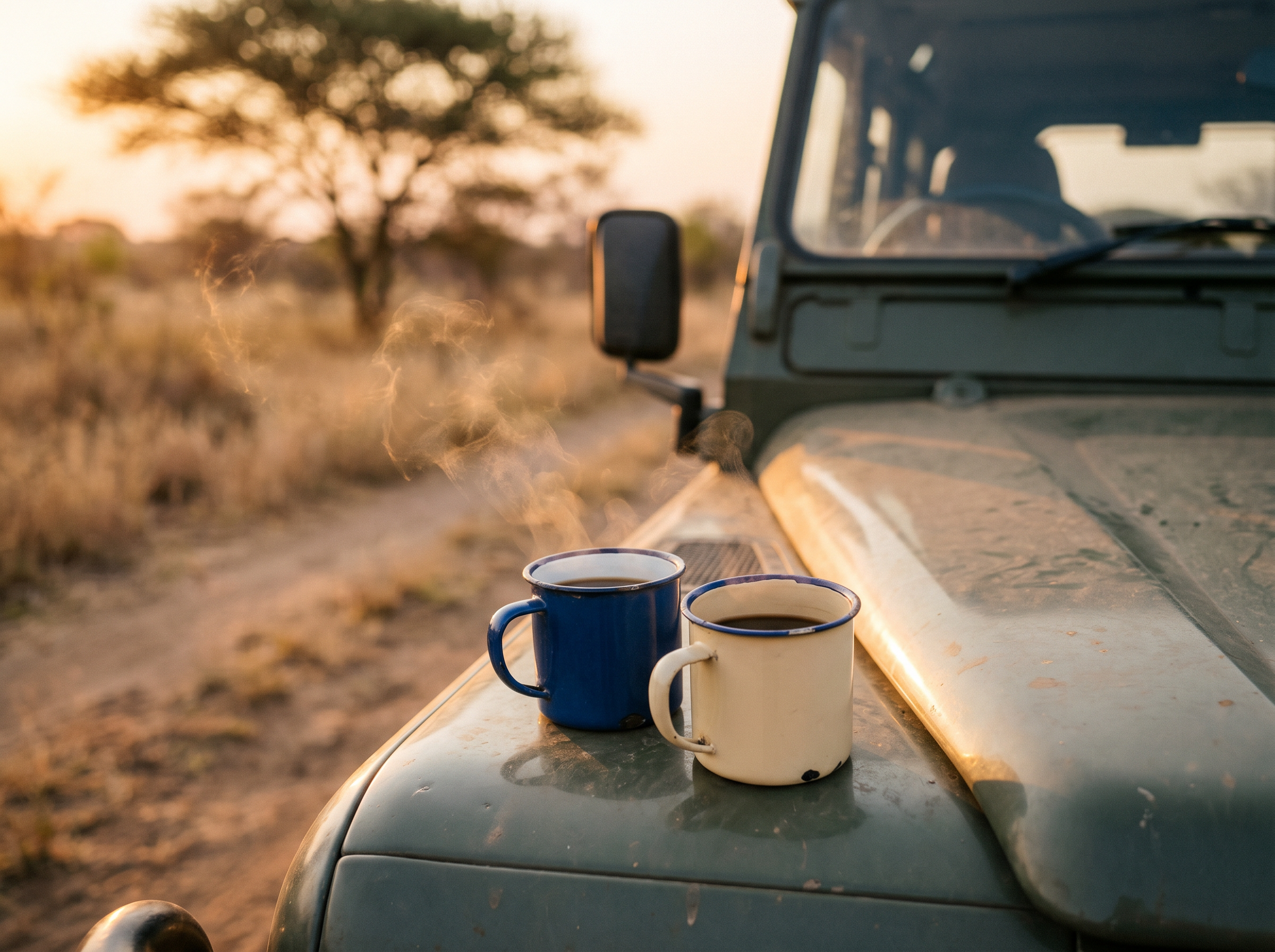
The diesel turns over in the dark. There is no ceremony to it. A cup of rooibos pressed into your hands while you are still pulling on a fleece, the smell of cold ash from last night's fire, and the sound of the camp generator winding down because the sun has not arrived yet to justify it.
We do this thing every morning. We wake guests at four-thirty, hand them coffee, and put them in an open vehicle while it is still cold enough to see your breath. Some travel agents tell us this is too much. They want lie-ins, slow breakfasts, the kind of safari that begins after a yoga class. We understand the logic. We do not run it that way.
Here is why.
What changes between four and six
The bush at five in the morning does not smell like the bush at nine. By nine, the heat has flattened everything into one note, dry grass and dust and sun on canvas. At five, the air still holds water. You can pick out wild jasmine where it climbs through a leadwood. You can smell elephant from two hundred metres away, that warm, slightly sweet hay smell that travels further than you would think. You can smell a kill from further than that.
The light is the obvious thing. Photographers know this and so do filmmakers, that thin gold hour where everything has an edge of warmth, where the mopane leaves catch and a giraffe in silhouette becomes the photograph people frame on a wall back home. We get up early because the light is good, but that is not really the answer.
The animals are working
The honest answer is that the animals are still working at five.
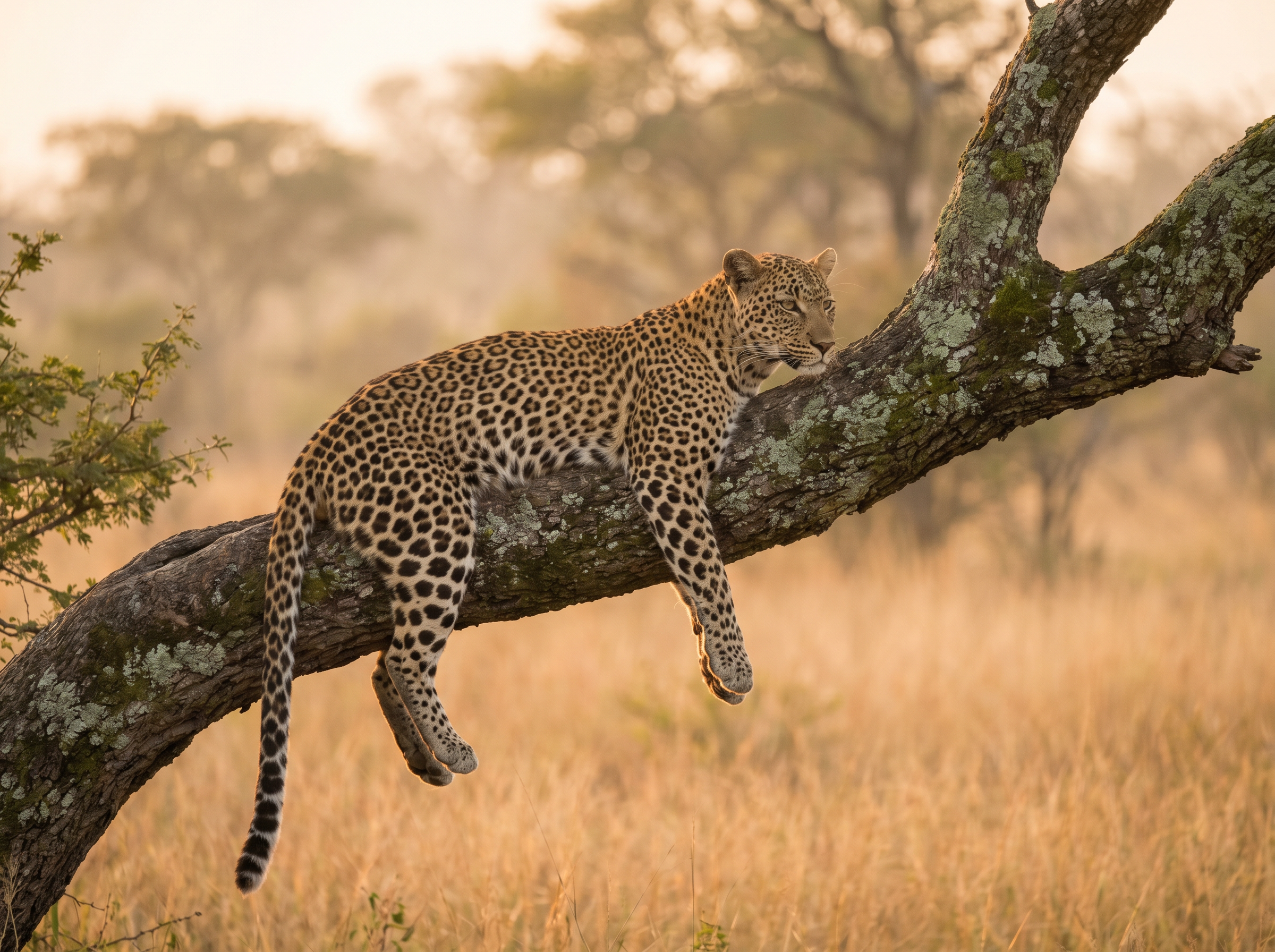
A leopard who has hunted in the night will move back to her tree before the heat sets in. By eight she is asleep in a branch with her tail hanging down and her ribs going up and down slowly, and she will not move again until dusk. If you want to watch her drag a bushbuck up a marula tree, you have a window of about ninety minutes.
The bush will pay you back with smells you cannot get from a video. With light. With cats that are still working and elephants that have not yet found shade.
Lions do the same. Buffalo move in the cool, drink, and bed down. Hyenas come back to the den. Wild dogs hunt at dawn and dusk and almost nothing in between. If you arrive at the sighting at ten in the morning, you arrive at a still life. At five-thirty, you arrive at the work.
What it actually feels like
We had a guest in October last year who did not want to do the early drive. She had flown in from London via Joburg, she was tired, she wanted to sleep. We did not argue. The next morning she heard the vehicle leave camp at five and changed her mind by six, and she was in the car at five the morning after that.
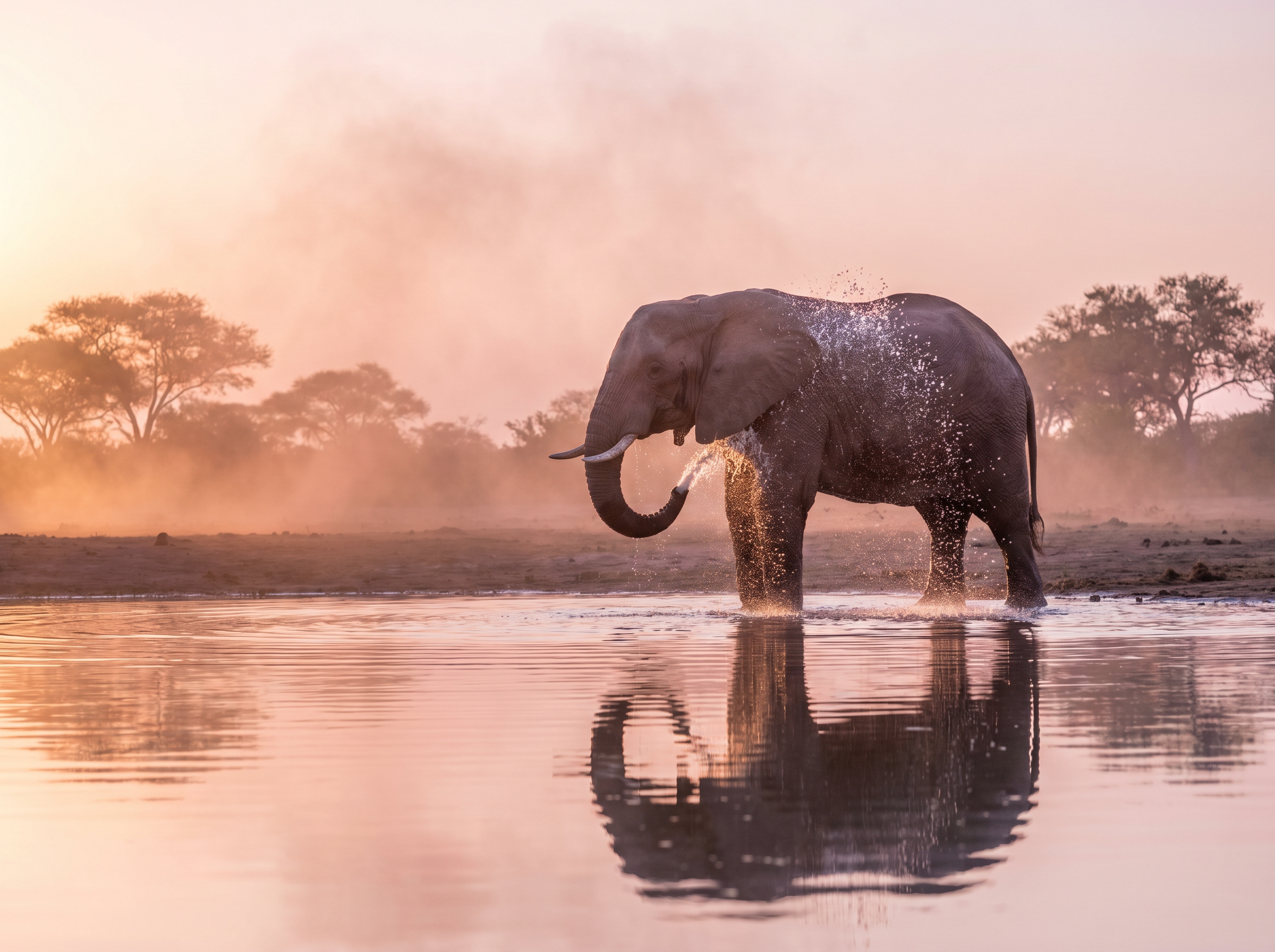
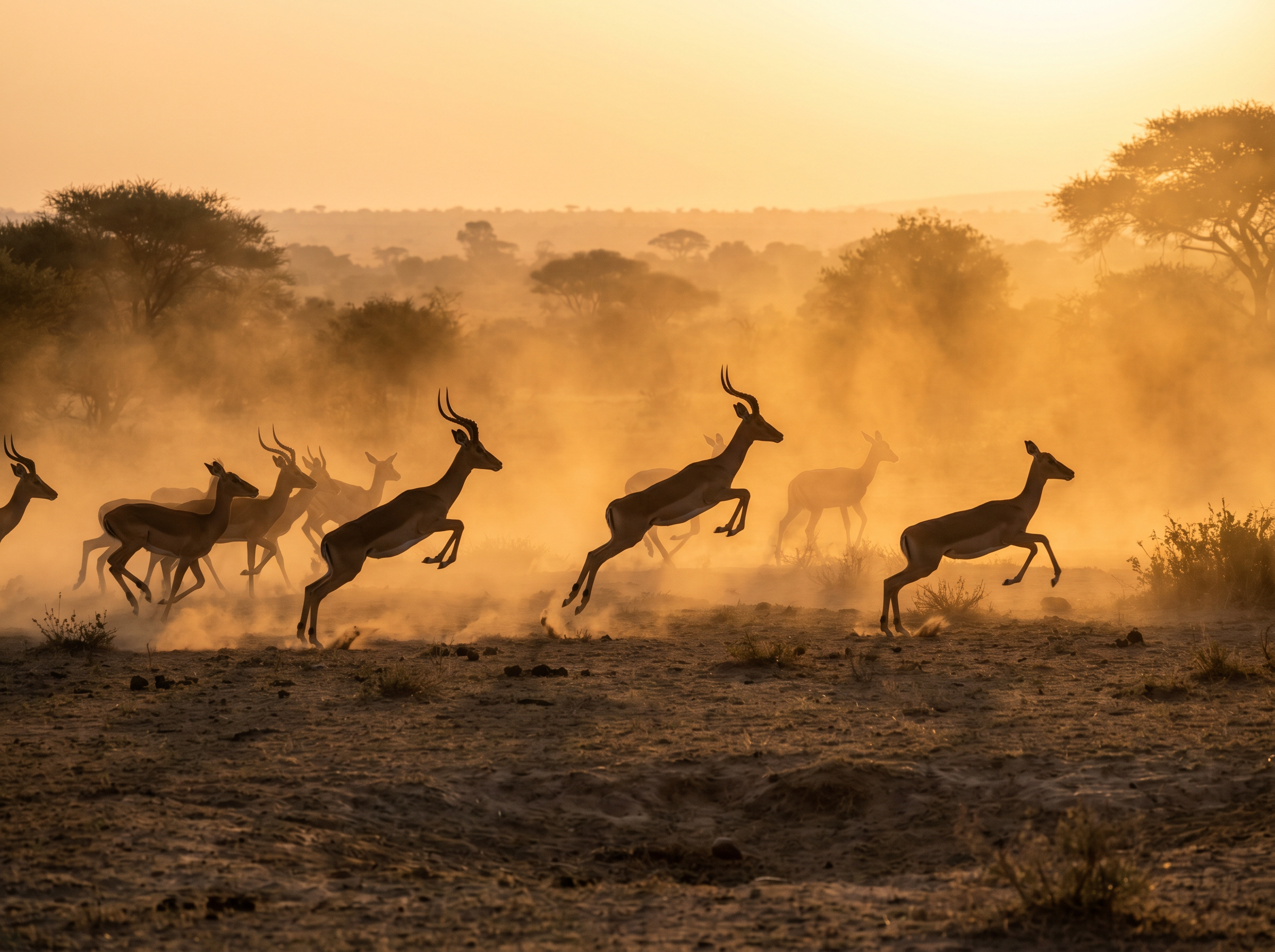
What did she see? A young male leopard finishing a kudu calf in a tree forty metres from the road, with a hyena pacing underneath waiting for scraps. Two elephants drinking at the dam, one of them pulling water through her trunk and spraying it across her back in a way that catches every bit of sun. A herd of impala spooked by something we never saw, all of them going up at once, that one collective decision animals make.
She came back at nine, ate eggs, slept until lunch, and was in the car again at four. She did this for six days.
The argument we keep making
A safari is not a beach holiday with binoculars. It is a working environment. The guides start at four. The trackers start earlier. The kitchen team is already plating breakfast for when the vehicles come back at nine, which means they got up at three. The whole camp is built around the hours when the bush is alive.
You can absolutely have a slow morning if you want one. We will plate you breakfast in your suite, leave you alone, and put you in the afternoon vehicle at four. Some of our guests do exactly that for one or two days of a six-day stay, and that is fine. But for the days you are willing to set an alarm, the bush will pay you back.
It will pay you back with smells you cannot get from a video. It will pay you back with light. It will pay you back with cats that are still working and elephants that have not yet found shade and the sound of francolin calling across the riverbed before any of the other birds have started.
It will pay you back with the thing people actually come for, which is the feeling that they were somewhere most of the world is not.
A note on coffee
The coffee is actually quite good. We have been refining it for a while. There is a Bushman's tea blend Vikki found in the Karoo that we put in a flask for the vehicle, and a French press of Tanzanian peaberry that our chef makes for the late risers. The early-drive thermos has the rooibos in it because it travels best.
We will leave a flask outside your door at four-thirty. You do not have to open it. But it will be warm when you do.
Asked & answered
What time does the morning game drive actually leave?
Is it cold?
Can I skip a morning drive?
How long is the drive?
Will I see the Big Five?
Read next
If this resonated
The bush has been expecting you
Start with a conversation. We will ask what makes you want to wake up at four-thirty, and build from there.
Begin a conversation
How many nights do you really need on safari?
Four nights in one private reserve is our usual answer for a first safari. Here is why, and why a night in Johannesburg on the way in makes them count.

Walking safari: why you see Africa differently on foot
You cover less ground on foot, and somehow you see much more.

Planning your first safari? Start with the people who can hear the hyenas
What we would tell you about your first safari if you sat down at our kitchen table. There is usually gin.

What we would tell a young woman starting out in safari travel
Both of us came out of corporate, one of us with travel experience already. This is the advice we give when a young woman writes and asks how to build a career in luxury safari travel.

Botswana has water again. Here is what that means for your safari.
Botswana is having a stronger water year. Here is what that changes, and why the right lodge and the right week still matter more than a brochure month.

18 On The Hill review: a luxury tented safari in the Greater Kruger
Read our 18 On The Hill review, a luxury tented safari lodge in Greater Kruger, with excellent food, beautiful scenery and memorable wildlife.

Royal Malewane reopens: what we remember, and what the fact sheet confirms
The original Royal Portfolio property is back after months behind scaffolding. We haven't seen it yet. Here is what we know anyway.

We run on solar and we have not printed since 2019
Vikki and Sian on solar power, paper, and what a small safari company can honestly claim.

Sandringham Private Game Reserve: should you go early, or wait?
Greater Kruger's newest reserve opens in August 2026. Our honest take on who should book Sandringham early, and who should give it a few seasons.

How do you want to feel when you get home?
Why we plan safaris around how you want to feel when you get home, not around a pin on the map.

South Africa's online traveller declaration: what it means for your safari (and what it doesn't)
A five-minute customs form now stands between you and the arrivals hall. Here's what it is, who needs it, and what nothing to declare actually means for a normal safari guest.

Safari After Dark
Night drives reveal a different Africa. Quieter, older, more deliberate. Here's what we love about the bush after the sun goes down.

How we tailor every Marula Hill safari
We don't start with destinations. We start with you: your pace, your family, your idea of a good day in the bush.

When space teaches: what Saseka's refresh tells us about gathering in the bush
What a thoughtful safari lodge refresh tells us about gathering in the bush.

Inside FedAir's new Baobab lounge at Hoedspruit
The new Baobab lounge at Hoedspruit airport changes how a safari begins. Vikki Jackson on the room that holds you before the bush does.

How safari pricing works: where the money goes
From the people who build the quotes. Where every part of the money lands, what a cheaper quote usually leaves out, and how to spend it well.

Monwana, and what coming home actually means
By Vikki Jackson and Sian Loehrer. A week at the Thornybush lodge that has built its whole identity around the word home, and what we found when we tested it against the room, the drives, the afternoons and the bill.

The Mozambique dhow: a slow boat at the end of a fast trip
Why we put a dhow afternoon into almost every Mozambique trip. Sail, salt water and the long breath out after safari.

Why we built the Antarctica page
A short note from Sian on why an African safari business added Antarctica to its destination map, and how we handle a trip neither founder has yet made.

Lion Sands Ivory Lodge. What their redesign gets right
I visited Lion Sands Ivory Lodge in the Sabi Sand. The redesigned spaces are quiet, bold, and rare. Here is what they got right.

Bazaruto vs Quirimbas: which Mozambique archipelago is right for you?
How to choose between Mozambique's two great archipelagos for a bush-and-beach trip. Geography, lodge feel, when to go.

Sabi Sand or Kruger
Two reserves, one fence line, very different mornings

What is the best month to visit Cape Town?
Cape Town rewards you differently in every season, but March to May is the window most of our clients come back to.

What Singita Lebombo's 2026 redesign tells us
Lebombo reopened March 2026 warmer, quieter, more art-led

Gorilla trekking, Uganda or Rwanda
Two countries, the same forest, two very different days
